TL;DR: The American Red Cross says families should make a plan, build kits gradually, and download its free Emergency app now — before flooding, fire, or winter storms force a last-minute scramble.
Reported from Lubbock, Texas, on Sept. 23, 2026, at 5:48 PM CDT, the message landed as rainfall raised flooding concerns across the region, according to KCBD. That same report said Texas Governor Greg Abbott had directed the Texas Division of Emergency Management (TDEM) to activate state emergency response resources for flood risk in West Texas.
Why the warning came this week in Texas
On the South Plains, severe weather season is typically in the spring, but the area faced a different set of risks that week, according to KCBD. Rainfall across the region brought the threat of flooding.
Deshun Avery, executive director of the Panhandle Plains Red Cross chapter, told KCBD that planning before an event is vital. “You can’t predict when something will happen,” Avery said, adding that preparation for yourself and family is key instead of trying to go last minute.
After what KCBD described as an already brutal summer, Senior Meteorologist John Robison said attention was turning toward an El Nino winter. For the area, in general, that would mean more moisture, which Robison described as the positive, according to KCBD. The negative, he said, would be the potential for more winter storms, with potential for either more ice and maybe even heavier snowfall.
For preparedness-minded households, the timing connects two seasons at once: handle flood risk now, while also thinking ahead to ice, snow, and power loss.
September is National Preparedness Month
September is National Preparedness Month, and the Red Cross used it as a call to prepare for emergencies large and small, according to KCBD. A Red Cross press release cited in that report said major disasters are happening about once every two weeks, while smaller emergencies, such as a house fire, happen every day.
“September is National Preparedness Month, the perfect time to get ready for emergencies large and small,” Avery said in the release. “Disasters can happen anywhere, at any time and getting your household ready for them doesn’t have to break the bank.”
In a separate Sept. 17, 2026 report from Radio Catskill, John Vale, executive director of the American Red Cross Hudson Valley Chapter, said preparedness covers everything from major flooding and severe storms to everyday emergencies such as house fires and power outages. “When we look towards preparing, it’s just making sure our families, our individuals here in the Hudson Valley have what they need to remain safe during an emergency, but also those hours and days that follow,” Vale said.
Vale said that includes having enough food, water, medications and other basic supplies available if a household is unable to leave home for several days.
Start with a written and practiced family plan
Avery said the first step families should take is talking through an emergency plan, according to KCBD. Verbalizing and practicing a plan could be the difference between evacuating safely or getting left behind.
The risk for children who have not practiced is specific. “When they don’t practice, tragically, sometimes kids will go back in their closet and hide,” Avery told KCBD. “And if there is a fire, we definitely don’t want that.”
The Red Cross suggests families pick two meeting places: one right outside the home and one outside the neighborhood in case of evacuation, according to KCBD. Families should plan how they will evacuate, where they will go, how they will get there and where they will stay. Those who need help leaving or who use public transportation should plan well in advance.
Radio Catskill reported similar guidance from Vale. Families should determine where they would meet if they had to evacuate their home and make sure everyone in the household knows how to get out safely. That kind of planning can be especially important if an emergency happens in the middle of the night.
For fire escape, the Red Cross recommends identifying two escape routes from each room whenever possible and establishing a meeting place outside so family members know where to go after evacuating, according to Radio Catskill. Families should also consider whether children, older adults or people with mobility or other functional needs may require additional help.
Paper backups when phones and internet fail
Both chapters stressed communications that do not depend on connectivity.
According to KCBD, the Red Cross says households should keep a phone list of pet-friendly hotels and animal shelters, and create emergency contact cards for all family members, including school or daycare numbers, in case the internet is down.
Vale told Radio Catskill that residents should know where their local town, county, police and fire departments share emergency information and have backup ways to receive updates if cell service becomes unreliable. Staying informed becomes especially important during power or internet outages, that report noted.
The free Red Cross Emergency app can provide alerts and preparedness information based on a person’s ZIP code, helping residents learn what types of disasters are most likely in their area and what steps they can take beforehand, according to Radio Catskill.
Build the go-kit for evacuation
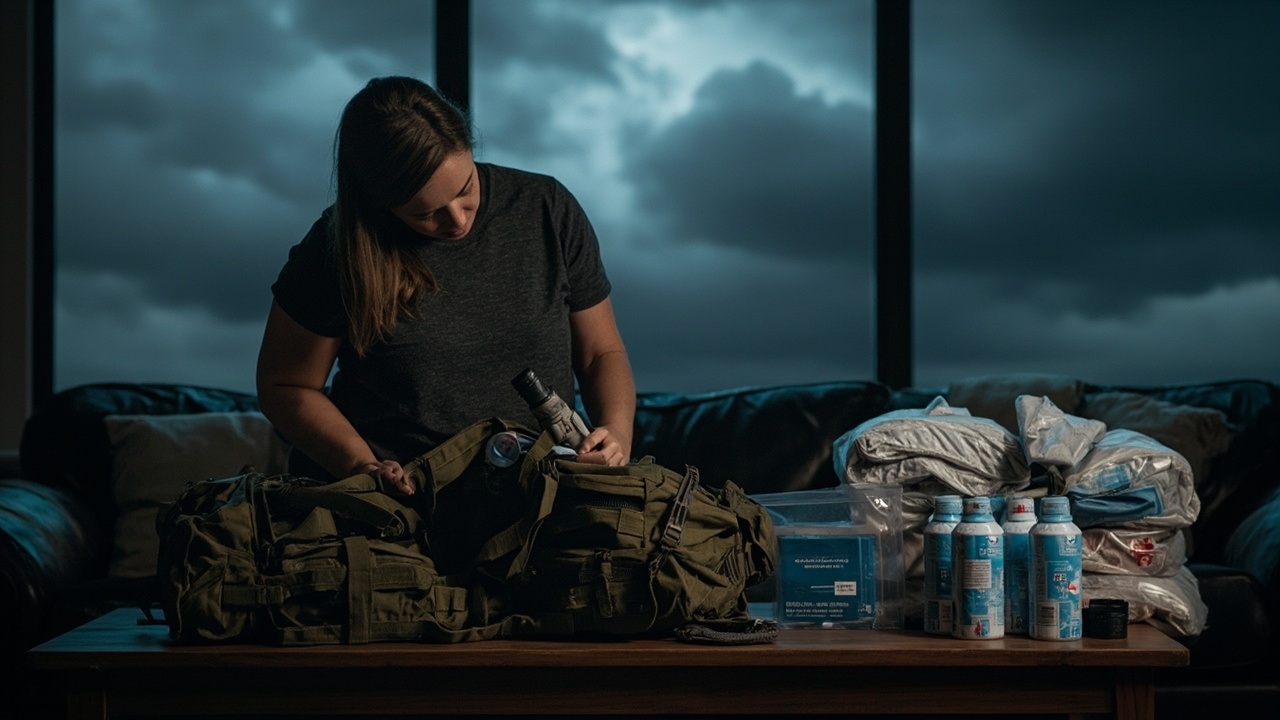
Avery described a go bag as a central tool for fast departure, according to KCBD. “I call it a go bag, making sure you have essential things in there and saying if something were to happen here’s where everything is,” Avery said. “Make sure everyone within the family knows where that is, because you don’t have time to look for stuff [in an emergency].”
Avery also suggested putting together an emergency kit with toiletries, medicine, documents and anything else needed after a disaster.
The size guidance is consistent across both reports. The agency suggests a go-kit should include three days of supplies that can be taken while leaving home, according to KCBD. Vale said a smaller “go kit” for an evacuation can include about three days of supplies, according to Radio Catskill.
Suggested go-kit and home-kit items reported by KCBD include a flashlight, a first aid kit, a battery or hand-crank radio, backup batteries and chargers, personal records, sanitation and hygiene items, extra cash, area maps, pet and baby supplies, matches, N95 masks, a manual can opener, extra car and house keys, towels, work gloves, a multi-purpose tool, blankets and sleeping bags.
Radio Catskill listed other useful supplies as flashlights, batteries, first-aid materials and a hand-crank radio.
Build the stay-at-home kit for longer disruptions
Evacuation is only one scenario. Sheltering in place requires more food, water and medication on hand.
According to KCBD, a stay-at-home kit should include two weeks of food and water and, if possible, a one-month supply of medications. Vale said households preparing to shelter in place should work toward having enough food, water and other necessities for one to two weeks, according to Radio Catskill.
For water planning, Vale gave a general guideline of about one gallon of water per person per day, according to Radio Catskill. The Postal Service-style lists are not the focus here; the Red Cross point is to have enough basic supplies if a household is unable to leave home for several days.
Avery said bags should be checked about every six months to make sure any food or medicine packed away has not expired, according to KCBD. That rotation check keeps a kit from failing when it is needed.
Buy gradually instead of all at once
Building an emergency kit does not have to happen in one shopping trip, Vale said, according to Radio Catskill. He recommends gradually adding supplies during normal grocery or hardware store trips while watching for sales, coupons, clearance items and discounts.
“You can start by building your kit slowly,” Vale said. “You can start buying items every time you shop.”
Avery made the same budget point in the Red Cross release cited by KCBD, urging families to try low-cost or no-cost steps to get started protecting loved ones.
For moms managing tight grocery budgets, that means adding one preparedness item per trip — extra batteries this week, extra pet food next week — rather than buying a complete kit in a single expensive run.
Radios, alerts, and the free Red Cross app
Power loss cuts off television, Wi-Fi and phone charging. A radio that does not need wall power fills that gap.
Vale said a hand-crank radio can be particularly helpful during an extended power outage because it does not depend on household electricity, according to Radio Catskill. “If we have, let’s say, a power outage, I would still be able to tune into the radio and stay informed,” he said.
The Red Cross also encourages people to download its free app. According to KCBD, it includes preparedness guides, National Weather Service alerts, live weather maps and help locating Red Cross shelters, and it is available in English and Spanish. The app can be found by searching “American Red Cross” in an app store or by visiting www.redcross.org/get-help/how-to-prepare-for-emergencies/mobile-apps.html.
Neighbors matter in the first 24 to 48 hours
Vale said neighbors checking on one another can become especially important during a major emergency, when police, firefighters and other emergency services may be stretched thin during the first 24 to 48 hours, according to Radio Catskill.
With winter weather eventually returning to the Hudson Valley, Vale said September is also an opportunity for residents to think ahead about snow, ice, power outages and other seasonal emergencies.
His advice for anyone who has not started was direct. “Disasters never wait for the right time,” Vale said. “Any step today will go a long way in helping you in the future.”
What Red Cross aid includes after disaster
When disaster does strike, Avery said being prepared can make all the difference, according to KCBD. The Red Cross does provide aid in the wake of disaster, including free shelter, meals, mental and physical healthcare, and financial assistance.
“We also help with funeral calls. We give $1,000 if there has been a casualty related to a particular fire or disaster,” Avery said.
The report said people can also call 1-800-RED-CROSS for assistance.
Sources referenced
- Red Cross urging families to prepare for weather, emergencies early - KCBD (https://www.kcbd.com/2026/09/23/red-cross-urging-families-prepare-weather-emergencies-early/)
- Red Cross Urges Hudson Valley Families To Prepare For Emergencies On A Budget – Radio Catskill (https://radiocatskill.org/red-cross-urges-hudson-valley-families-to-prepare-for-emergencies-on-a-budget/)