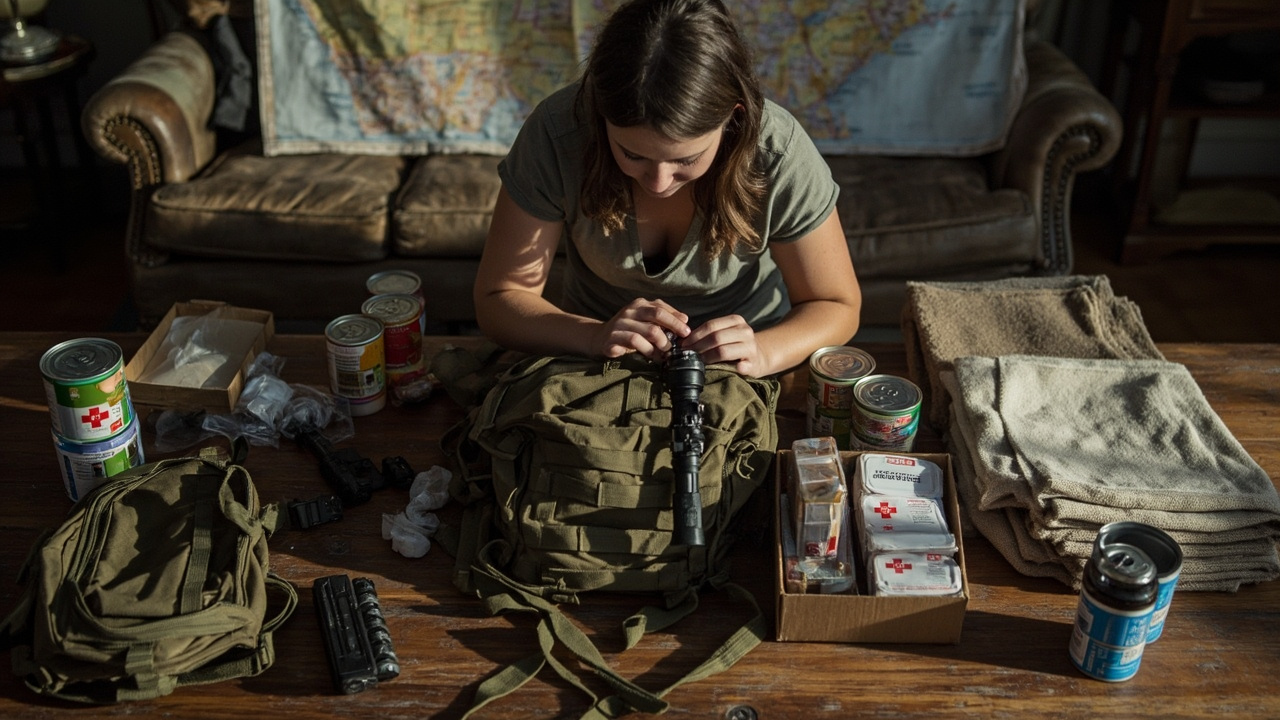
TL;DR: National Preparedness Month started September 1, 2026 under the theme “Americans Stand Ready,” with FEMA, the White House, and East Texas officials urging every household to make a written plan, sign up for alerts, and build a 72-hour kit now.
September kickoff sets the 2026 theme
FEMA’s Ready Campaign launched National Preparedness Month 2026 on September 1, 2026, according to FEMA Kicks Off National Preparedness Month 2026, Empowers Americans to Stand Ready to Protect Their Loved Ones During Emergencies and Disasters.
The release is numbered HQ-26-118 and names this year’s theme “Americans Stand Ready.”
The observance has been held since 2004 to encourage Americans to prepare for emergencies, the agency reported.
FEMA described September as a time to take small steps that make a big difference and to promote preparedness in communities.
FEMA Administrator Cameron Hamilton said resourcefulness and civic duty bring Americans together after disaster through service to their communities.
Hamilton said steps taken to prepare families make every neighborhood and community more resilient.
He urged people to learn skills that help families and neighbors so they can stand ready when things go wrong.
FEMA framed the 2026 theme as a celebration of American resourcefulness, self-reliance and resilience.
The agency said the theme highlights preparedness as civic responsibility and patriotic duty.
FEMA listed tornadoes, wildfires and hurricanes among the disasters Americans can face.
The agency said simple, practical steps can help people keep themselves and families safe in those events.
FEMA encouraged the public to visit Ready.gov for updated resources and to begin a disaster preparedness journey.
State, local, tribal and territorial agencies were invited to share personal preparedness information, alongside associations, academic institutions, private-sector groups, faith-based groups and community organizations.
FEMA said it published a free, ready-to-use toolkit with customizable messaging and safety tips to help those groups spread the word.
White House message ties readiness to homes and systems
The White House issued a Presidential Message on National Preparedness Month on September 2, 2026.
The message called on citizens to ready themselves, their families, homes, businesses and communities for natural and man-made threats.
It said readiness begins with understanding the risks that matter most.
Before a crisis, the message listed practical home steps including protecting homes and property, purchasing affordable insurance against faced risks, knowing evacuation routes, maintaining an emergency kit with essential supplies, and staying informed through trusted local news and real-time alerts.
The message said those investments save lives, protect livelihoods, and help families and communities return to normal.
It said businesses and operators of critical infrastructure also must be ready.
It named energy, communications, transportation, financial, water, food and health systems as the systems that power American life and must remain available when needed most.
The Administration said it is working to strengthen reliability of those systems, secure supply chains, reduce dangerous dependencies, and ensure services continue through crisis.
The message noted that on June 23, 2026, the President issued the National Resilience Strategy describing how the Nation, through federalism, will achieve a readiness posture.
It said the Administration continues transforming emergency management around readiness, responsibility and results.
It said states and communities must build fiscal and operational capacity to manage emergencies they routinely face and support one another through mutual aid, speeding deployment and delivery of critical resources.
The message said the Federal Government can then concentrate resources on the greatest risks and catastrophic incidents, regionally or nationally.
It honored first responders, law enforcement officers, emergency personnel and volunteers who answer the call when the alarm sounds.
Why East Texas opened September on alert
In East Texas, officials opened the month with a local warning tied to shifting hazards, according to National Preparedness Month kicks off with reminder to have a plan in place.
That report by April Pierdant was published September 2, 2026 at 9:53 PM CDT for Tyler, Texas.
It said East Texas emergency officials and the American Red Cross are urging residents to have a family plan before the next disaster.
The report cited active burn bans, ongoing wildfire threats, and tropical weather systems spawning severe weather in the region.
It said local leaders stress that early preparation is key to surviving unpredictable Texas weather.
Karen Holt is identified as Executive Director of the American Red Cross East Texas Chapter.
Holt said disasters do not follow a timeline and can happen overnight, during a work commute, or while children are at school.
The report said threat levels in the area are constantly shifting.
In August, East Texas faced severe drought and extreme wildfire risks, the report stated.
Now in September, incoming tropical systems bring potential for flash flooding and spin-up tornadoes, the report stated.
Smith County Judge Neal Franklin warned residents to remain vigilant against all hazards.
Franklin said people should take precautions, noting that readiness can mean the difference between life and death.
Holt urged residents not to wait until the last second and to take care of preparation tasks now.
Make a written household plan first
FEMA’s September guidance starts with a household plan that includes pets, so family members know what to do, where to go and what they will need during a disaster.
The agency said plans should consider unique local risks and family needs.
It said residents should know where they will go if they must leave home and should learn evacuation routes to get there safely.
Ready.gov’s Make A Plan page outlines four stages: meet with family, assess household needs, document the plan, and practice the plan.
The first stage calls for discussing five questions: how alerts and warnings will be received, what the shelter plan is, what the evacuation route is, what the family or household communication plan is, and whether the emergency kit needs updating.
The second stage calls for tailoring plans and supplies to daily living needs and responsibilities.
Ready.gov lists factors to discuss, including ages of household members, responsibilities for assisting others, frequently visited locations, dietary needs, medical needs including prescriptions and equipment, disabilities or access and functional needs including devices and equipment, languages spoken, cultural and religious considerations, pets or service animals, and households with school-aged children.
The page says people in a network can assist each other with communication, care of children, business needs, pets or other needs.
The third stage uses a fillable Family Emergency Plan form for household information, family member names and contacts, meeting places and medical information.
The fourth stage calls for practicing the plan with the household.
The 2026 partner toolkit adds household actions such as picking a safe meeting place, assigning responsibilities, practicing how to leave safely, and planning how to stay in touch.
The toolkit suggests keeping emergency contact cards in wallets and backpacks and including an out-of-state contact who may be easier to reach during a local emergency.
For people with disabilities, the toolkit says additional steps may be needed because access to a medical facility or drugstore may be unavailable after disaster.
It says planning for daily needs is crucial when those needs could become limited or unavailable.
Build a 72-hour kit without overspending
FEMA said residents may already know how to keep loved ones safe, but asked whether they have what is needed to stay safe and comfortable until help arrives.
The agency said building a well-stocked emergency kit does not need to be difficult or expensive.
It said supplies can be gathered over time, starting with items already at home such as canned food and first aid supplies.
FEMA points households to ready.gov/kit for a list of items and guidance on tailoring a kit to family needs.
East Texas guidance described a 72-hour “go bag” packed and ready to grab for sudden evacuation.
According to emergency guidelines cited in the KLTV report, a basic kit should include a first aid kit.
It should include at least three days’ worth of food and water.
It should include toiletries and a blanket.
It should include flashlights and extra batteries.
It should include backup phone chargers and portable battery banks.
It should include an emergency cash reserve.
It should include digital copies of important documents securely stored in the cloud.
Ready.gov also lists related resources for documenting and insuring property, safeguarding critical documents and valuables, saving important documents to the cloud, medication tips, low- and no-cost preparedness, emergency plans for commuters, pet owners, and an Emergency Financial First Aid Kit.
The partner toolkit says making a plan early helps reduce stress and save time and money.
It says disasters are costly but preparing does not have to be, and preparation now can save thousands of dollars and provide peace of mind.
It points to Ready.gov’s low- and no-cost tips page for lower-cost preparation options.
Stay informed through multiple alerts
FEMA’s second September action is to be in the know by signing up for a community warning system.
The agency said disasters can happen suddenly, making multiple ways to receive alerts important.
It named the Emergency Alert System and National Oceanic and Atmospheric Administration Weather Radio as providers of emergency alerts.
In Smith County, Franklin said notification is a resident’s best defense when severe weather strikes.
Franklin said the most important thing is to be notified of dangers.
Holt said residents should stay tuned to local emergency management and city and county pages through apps, the internet and cell phones, and should know what is happening in surrounding areas.
For power outages or cell tower failures, officials pointed to a handheld, battery-operated radio as critical for receiving updates from local meteorologists and emergency officials.
Franklin described preparation as fundamentally a knowledge piece.
Detroit’s Office of Emergency Management & Homeland Security likewise urged residents to prepare and practice a family emergency plan, develop a family emergency communications plan, and build an emergency supplies kit.
That city guidance pointed residents to Ready.gov and detroitmi.gov/EMHS for plan development resources.
Detroit officials also urged registration for Detroit Alerts 365, the city emergency notification system delivering alerts by text, phone or email.
Clemson University’s Office of Emergency Management similarly urged students and staff to be weather aware, know common local disasters, sign up for CU Alerts, keep multiple information sources including NOAA weather radio, local broadcasts and wireless emergency alerts, and download a weather app for National Weather Service alerts.