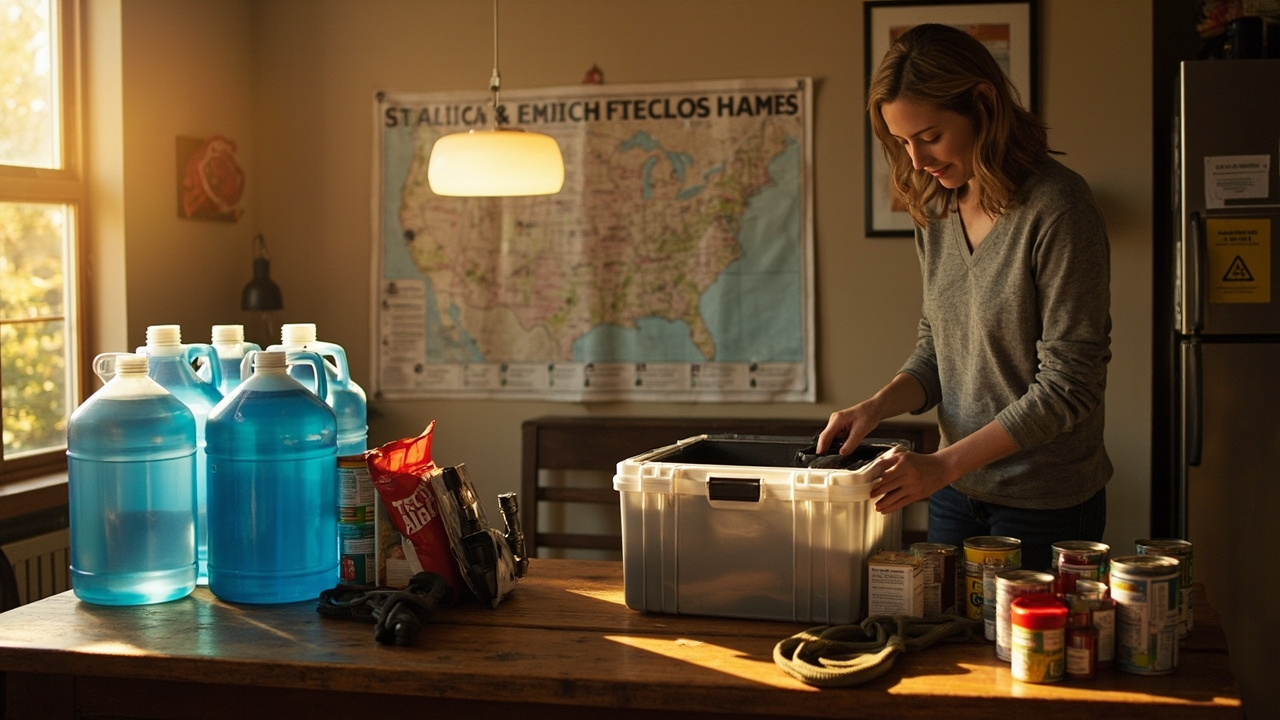
TL;DR: For National Preparedness Month 2026, FEMA asks every household to make a plan that includes pets, arrange multiple ways to get alerts, and build a kit gradually from supplies already at home.
2026 theme puts households in charge
FEMA's Ready Campaign launched National Preparedness Month 2026 from Washington with Release Number HQ-26-118 on September 1, 2026.
The 2026 theme is Americans Stand Ready, a call for individuals to take charge of their own readiness.
Observed since 2004, according to the FEMA release titled "FEMA Kicks Off National Preparedness Month 2026, Empowers Americans to Stand Ready to Protect Their Loved Ones During Emergencies and Disasters," September encourages Americans to prepare for emergencies.
The same release describes the month as a time to take small steps that make a big difference and to promote preparedness in communities.
This year's theme highlights preparedness as a civic responsibility and patriotic duty, according to FEMA.
It also celebrates the self-reliant, resourceful spirit of the American people.
FEMA Administrator Cameron Hamilton said resourcefulness and civic duty bring people together after a disaster through acts of service.
Hamilton also said steps that keep families safe make every neighborhood and community more resilient.
FEMA pointed to tornadoes, wildfires and hurricanes as disasters where simple, practical steps help keep families safe.
FEMA said proactive preparation makes the nation stronger and more resilient.
FEMA encourages everyone to visit Ready.gov in September for updated resources and for help starting a disaster preparedness journey.
The agency also published a free, ready-to-use toolkit with customizable preparedness messaging and safety tips, according to that FEMA release.
State, local, tribal and territorial agencies can use the toolkit to share personal preparedness information, along with associations, academic institutions, private-sector groups, and faith-based and community organizations.
Start with a household plan that names risks
FEMA's 2026 guidance asks households to make a plan for everyone under the roof, including pets, so family members know what to do, where to go and what they will need during a disaster.
The plan should consider the unique risks where you live and the needs of your family.
Families should know where they will go if they must leave home and should learn evacuation routes to get there safely.
Ready.gov offers a fillable Family Emergency Plan form for contacts, meeting places and medical information, as described in guidance summarized for Texas households by Republic EMS on September 3, 2026.
According to that Republic EMS guide titled "National Preparedness Month: Build Your Family's Kit and Plan," the planning message begins with the reminder that family members may not be together if a disaster strikes.
The guide outlines four planning moves for families to complete together.
First, meet with your family to talk through how you will receive emergency alerts and warnings, your shelter plan, your evacuation route and how you will communicate.
Second, assess household needs such as ages, medical needs, disabilities, pets, dietary needs and other household-specific factors.
Third, write the details down using the Ready.gov fillable form.
Fourth, practice the plan by walking through it so everyone knows their role.
The Nebraska Emergency Management Agency gave the same household message from Lincoln, Nebraska, on September 1, 2026.
According to the NEMA release titled "National Preparedness Month: Prepare Before Disaster Strikes," families should discuss emergency plans, including how they will communicate and where they will go if they need to evacuate.
NEMA noted that wildfires have significantly impacted communities across Nebraska this year and can spread quickly.
NEMA Assistant Director Erv Portis said the best time to prepare is before an emergency happens.
Portis also said a few minutes spent making a plan and gathering essential supplies today can help a family respond more safely tomorrow.
Get alerts in more than one way
FEMA's second action for September is to be in the know by signing up for a community warning system.
Disasters can happen suddenly, so FEMA says it is important to have multiple ways to get alerts.
The Emergency Alert System and National Oceanic and Atmospheric Administration Weather Radio also provide emergency alerts.
The Republic EMS summary of Ready.gov guidance lists a battery-powered or hand crank radio, a NOAA Weather Radio, a flashlight and extra batteries as core information and light items.
NEMA said it will share preparedness tips, reminders and resources on social media throughout National Preparedness Month.
Nebraskans were encouraged to follow those posts and take steps throughout the month to become better prepared.
Build a kit over time, in three places
FEMA's third action is to build a kit to stay safe and comfortable until help arrives.
According to FEMA, a well-stocked emergency kit does not need to be difficult or expensive to assemble.
Families can gather supplies over time, starting with items already at home like canned food and first aid supplies.
Ready.gov/kit provides a list of items to include and explains how to tailor a kit to family needs.
NEMA recommends keeping a kit at home, at work and in vehicles, according to the NEMA release at https://nema.nebraska.gov/articles.php?nid=412.
NEMA lists at least one gallon of water per person per day for three days.
That Nebraska list also calls for a three-day supply of non-perishable food and a manual can opener.
First aid supplies and necessary medications or medical items for the entire family are on the NEMA list.
The list adds a flashlight and extra batteries.
Phone chargers and a portable power bank are also on the NEMA list.
Pet supplies are included as well.
Important family documents stored electronically or in a waterproof, portable container complete the NEMA core list.
NEMA says local community food banks may be a resource for families experiencing food insecurity who need help putting together a basic emergency kit.
Once assembled, NEMA says to store the kit in a safe, accessible location and make sure everyone in the household knows where to find it.
What goes inside a several-day kit
The Republic EMS guide recommends keeping enough supplies to get a household through several days.
Its core water amount is one gallon per person per day for several days, for drinking and sanitation.
Food guidance calls for at least a several-day supply of non-perishable food, plus a manual can opener.
For first aid and signaling, the guide lists a first aid kit, a whistle to signal for help and dust masks to help filter contaminated air.
Sanitation items include moist towelettes, garbage bags and plastic ties.
Tools include a wrench or pliers to turn off utilities, plus plastic sheeting, scissors and duct tape.
Communication items include a cell phone with chargers and a backup battery, along with local maps.
The guide says a store-bought kit is a starting point rather than a finished product.
Households are asked to add prescription medications and over-the-counter medicines.
Eyeglasses and contact lens solution belong in the added items.
Copies of important family documents, such as insurance policies, identification and bank account records, are also recommended additions.
The additions continue with cash, hygiene products and disinfecting wipes.
Infant supplies, pet food and water, and activity items for children are listed for families with young children or animals.
Blankets, a complete change of clothing, a fire extinguisher and waterproof matches round out the household-specific additions described in that guide.
Canned food should be stored in a cool, dry place, with expired items replaced.
The guide repeats Ready.gov advice to re-think needs every year and update the kit as family needs change.
Plan for medical needs, older adults and pets
FEMA's household-plan step specifically includes pets, so animals are part of decisions about what to do, where to go and what to bring.
NEMA's kit list includes pet supplies.
The Republic EMS guide includes pet food and water in its family additions.
Texas context in that September 3 guide notes that hurricanes, flooding, extreme heat and winter storms can knock out power, close roads and make it harder to reach medications and care.
For older adults, Ready.gov guidance summarized in that guide recommends packing medicines, medical supplies, batteries and chargers in the emergency kit.
It also recommends planning how to bring assistive devices during an evacuation.
Making copies of Medicaid, Medicare and other insurance cards is another recommended step for older adults.
Older adults are encouraged to build a support network of family, friends and others, with at least one person holding a key to the home and knowing where supplies are kept.
The guide also recommends asking a clinic or treatment center about its emergency plans and about backup providers for routine treatments.
Use low-cost moves and neighborhood help
The National Association of Counties released a 2026 National Preparedness Month County Participation Toolkit on September 1, 2026.
The toolkit points residents to Ready.gov's low- and no-cost tips at ready.gov/low-and-no-cost.
It also points residents to a free fillable family emergency plan form at ready.gov/plan and kit guidance at ready.gov/kit.
County guidance in that toolkit encourages taking a first aid or CPR class.
It also encourages joining a Community Emergency Response Team, with training described as covering fire safety, light search and rescue and disaster medical operations.
NACo suggests forming partnerships with industry leaders, service providers, local universities and neighboring counties to maximize resources and capacity.
It also suggests passing a local resolution recognizing September as National Preparedness Month.
The FEMA toolkit serves the same local purpose with customizable preparedness messaging and safety tips for community use.
Together, the federal, state and county materials describe September as a month to know local risks, write down meeting places and evacuation routes, keep water, food, light, power and paperwork ready, and check the kit again as household needs change.