No-Cost Readiness First: How to Prepare for Emergencies Without Breaking the Bank
TL;DR: You can get your household ready for emergencies with no-cost actions like making an evacuation plan and downloading a free app, plus building go-kits slowly from items you already own.
Major disasters in the United States are now happening about once every two weeks, with everyday smaller emergencies like a fire in someone's home adding to the risk, according to reporting in How to get ready for emergencies the low-cost, no-cost way | Woodlands Online. That frequency is why preparedness leaders say households should act during September, which is National Preparedness Month.
The message from Edward Blanchard, Regional Disaster Officer for the Texas Gulf Coast Region of the American Red Cross, is that getting your household ready does not have to break the bank. As quoted in Woodlands Online, Blanchard said September is the perfect time to get ready for emergencies large and small, and urged families to try low-cost or no-cost steps to start protecting loved ones.
For moms managing tight grocery budgets, the low-cost approach flips the usual gear-list anxiety. Start with free planning, add a free alerting tool, then build supplies one item at a time using sales and items already on hand.
Why September Matters for Household Readiness
September is National Preparedness Month, described as a time to get households ready for emergencies large and small.
The timing matters because disasters can happen anywhere, at any time, according to Blanchard. As reported by Woodlands Online, he warned that disasters do not wait for the right time — they can happen in the middle of the night, while you are at work, or while kids are at school.
That unpredictability applies across the scale of events, from a fire in someone's home to a storm that destroys an entire town. Blanchard said these emergencies can change lives in just minutes, and that being prepared is your best defense.
With prices climbing on just about everything, the American Red Cross, Texas Gulf Coast Region, framed its guidance specifically for cost pressure: simple, low-cost or no-cost steps everyone can take, as detailed in Woodlands Online.
Start Free: Make a Household Emergency Plan
A great way to get started, and one that will not cost a thing, is to develop an emergency plan for your household.
The plan starts with picking two places to meet: right outside your home and a place outside your neighborhood in case you cannot get home or have to evacuate. That two-location rule gives children and adults a clear fallback if streets are blocked or you are separated.
Next, plan how you will evacuate. Think about where you will go, how you will get there, where you will stay and what you will take with you. Plan well in advance if you will need help leaving or use public transportation, which is especially important for households with older adults, people with disabilities, or single-car families.
Do not forget pets in that written plan. Keep a phone list of pet-friendly hotels/motels and animal shelters on your phone, so you are not searching during an evacuation order.
Make up emergency contact cards for the whole family in case the internet is down and save the information on everyone's phone. Do not forget the number for your children's school or daycare, a detail specifically flagged for parents.
Customize the plan to your household's specific needs. If you have young children, account for formula and diapers in what you would carry. If you have pets, account for leashes, carriers, food, bowls and litter.
Get Free Alerts Before, During and After
One no-cost tool highlighted for National Preparedness Month is the Red Cross Emergency app, which helps you and your loved ones before, during, and after a disaster.
According to Woodlands Online, the app includes guides to help you prepare, National Weather Service alerts, live weather maps and help locating Red Cross shelters. It is free to all users, available in English and Spanish, and designed with accessibility in mind.
You can find it by searching for 'American Red Cross' in your app store or visiting redcross.org/apps.
A companion no-cost step, described in National Preparedness Month: Get Ready for Emergencies with These Easy, Budget-Friendly Steps, is to sign up for emergency alerts from your local government. Find out how officials get out critical local information — like evacuation notices — during an emergency.
The national Red Cross guidance also urges households to learn what disasters or emergencies may occur in your area. Those events can range from those affecting only you and your family, like a home fire or medical emergency, to those affecting your entire community, like an earthquake or flood.
Together, the app plus local alerts cover two different warning paths: national weather and shelter information, and city- or county-level evacuation instructions.
Build Kits Slowly to Keep Costs Down
Gather supplies for a go-kit and a stay-at-home kit, but use items you already have on hand to keep the cost down.
The recommended sizes are different by design. Your go-kit should include three days of supplies that you can take with you. Your stay-at-home kit should have two weeks of food and water and a one-month supply of medications, if possible.
To avoid a budget hit, build your kit slowly, perhaps buying an item every time you shop. The Red Cross points families to practical savings tactics: look for sales — buy one, get one free, clearance bins, clip coupons, shop discount stores.
The national Red Cross version of the guidance adds another money-saver to check: does your area have tax-free days for emergency supplies. If so, timing a larger purchase like a radio or first-aid kit to that window can lower the total.
The core concept is steady progress. One extra can, one pack of batteries, or one hygiene item per grocery trip turns readiness into a routine rather than a single expensive haul.
What to Pack From What You Own
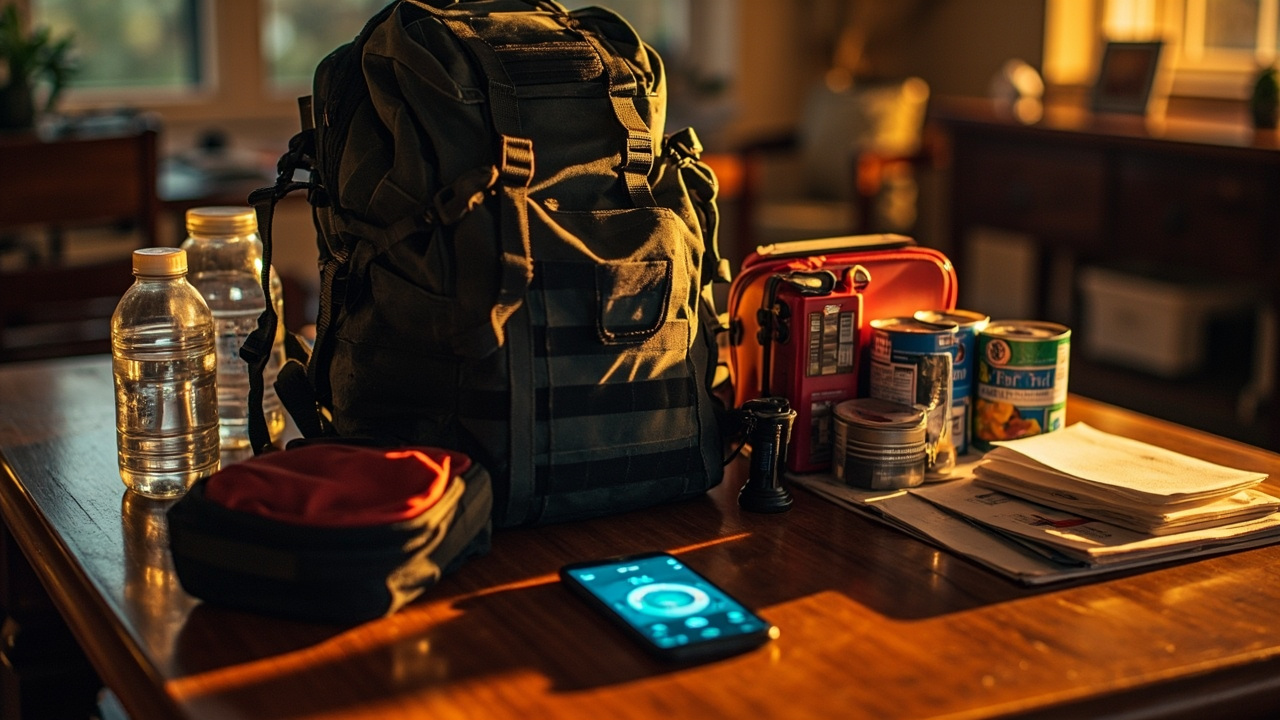
Start with basics that many homes already contain: a flashlight, a first aid kit, and a battery or hand-crank radio.
Make sure to include backup batteries and chargers for your devices, such as flashlight, cell phone, CPAP, wheelchair and similar equipment, plus critical personal records. Power for medical and communication devices should be treated as essential, not optional.
Other items listed for consideration include sanitation and personal hygiene items, extra cash, maps of the area, pet supplies, baby supplies, matches, N95 masks, a manual can opener, extra car and house keys, towels, work gloves, a multi-purpose tool, blankets and sleeping bags.
Again, tailor the contents. If you have young children, do not forget formula and diapers. If you have pets, include leashes, carriers, food, bowls and litter. That customization prevents the common mistake of packing a generic bag that misses daily needs.
Store contact cards and copies of records where they remain reachable if phones die or the internet is down. Saving information on everyone's phone plus carrying a paper card creates redundancy for school, work, and caregiver numbers.
If You Lead a School, Business or Group
If you own a business or are part of a school or organization, it is critical you are prepared and know what to do should an emergency happen.
The Red Cross offers a free service — the Ready Rating Program — that provides tools, resources and information for improving your group's ability to withstand disaster, maintain operations, and protect lives and property.
According to the national Red Cross description, Ready Rating members have access to tools to complete easy self-assessments to measure preparedness and find areas that need improvement. Whether the workplace is large or small, you can join the free, self-paced program.
For parent volunteers, PTA leaders, home daycare operators and small businesses, that means the same low-cost logic applies beyond the home: assess, plan, and protect lives without paying for the framework.
Your September Start Checklist
During National Preparedness Month, set aside a little time to get you and your loved ones ready. Take these few easy steps and start your trip toward readiness, as Blanchard urged.
Pick your two meeting places this week. Save school, daycare, pet shelter and family contacts on phones and on paper cards. Download the free Emergency app and enroll in local government alerts. Pull three days of portable supplies for the go-bag and stage two weeks of food and water plus medications at home where possible.
Disasters can strike overnight, during a commute, or while children are at school. Starting with free planning today is the lowest-cost protection you can give your household.