TL;DR: Build a several-day food and water supply, write a household communication and evacuation plan, and enable Wireless Emergency Alerts, EAS broadcasts, and NOAA Weather Radio for official warnings.
What FEMA and Ready.gov Tell the General Public to Do First
Your household may need to survive on your own for several days after an emergency, with your own food, water and other supplies to last for several days, according to Build A Kit | Ready.gov. That page defines a disaster supplies kit as a collection of basic items your household may need in the event of an emergency. Your family may not be together if a disaster strikes, so it is important to know which types of disasters could affect your area and how you will contact one another and reconnect if separated, according to Make A Plan | Ready.gov. The federal approach asks individuals to do three key things: get an emergency supply kit, make a family emergency plan, and be informed about different types of emergencies and appropriate responses, according to the Emergency Supply List document from Ready / FEMA.
Each September, FEMA's Ready Campaign celebrates National Preparedness Month, and since 2004 the campaign has used the month to encourage Americans to prepare for emergencies, according to National Preparedness Month: Americans Stand Ready | Ready.gov. This year's theme is "Americans Stand Ready." The theme reflects unity, resilience and resourcefulness, and it reminds residents that proactive steps before a disaster contribute to safety and security, according to that same Ready.gov resource. The campaign focus includes upholding support for first responders by being prepared and self-reliant, protecting family and friends, and helping communities through proactive readiness, according to that same Ready.gov resource.
Build a Kit That Covers Several Days
Start With Water, Food, Light and First Aid
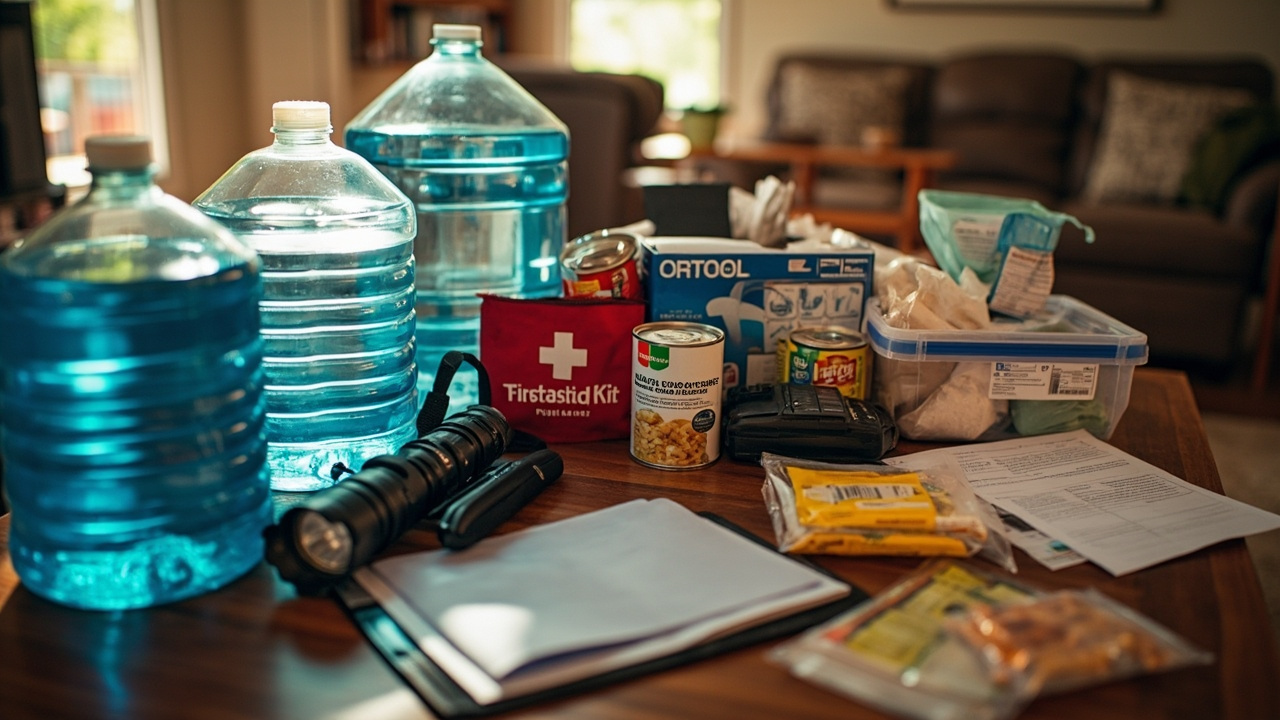
To assemble your kit, store items in airtight plastic bags and put your entire disaster supplies kit in one or two easy-to-carry containers such as plastic bins or a duffel bag, according to Build A Kit | Ready.gov. A basic emergency supply kit could include water at one gallon per person per day for several days, for drinking and sanitation, according to that same checklist. It could also include food at at least a several-day supply of non-perishable food, according to that same checklist. Once you review the basic items, consider what unique needs your family might have, such as supplies for pets or seniors, according to that same checklist.
Include a battery-powered or hand crank radio and a NOAA Weather Radio with tone alert, plus a flashlight, first aid kit, and extra batteries, according to Build A Kit | Ready.gov. Add a whistle to signal for help and a dust mask to help filter contaminated air, according to that same checklist. Add plastic sheeting, scissors and duct tape to shelter in place, according to that same checklist. Add moist towelettes, garbage bags and plastic ties for personal sanitation, according to that same checklist. Add a wrench or pliers to turn off utilities, a manual can opener for food, local maps, and a cell phone with chargers and a backup battery, according to that same checklist. You can download a printable version to take with you to the store, according to that same checklist.
Add Medical, Infant, Pet and Document Supplies
Consider adding soap, hand sanitizer and disinfecting wipes to disinfect surfaces, according to Build A Kit | Ready.gov. About half of all Americans take a prescription medicine every day, and an emergency can make it difficult to refill a prescription or find an open pharmacy, according to that same checklist. Organize and protect prescriptions, over-the-counter drugs, and vitamins to prepare for an emergency, according to that same checklist. Also consider non-prescription medications such as pain relievers, anti-diarrhea medication, antacids or laxatives, according to that same checklist. Add prescription eyeglasses and contact lens solution when needed, according to that same checklist.
Add infant formula, bottles, diapers, wipes and diaper rash cream when needed, according to Build A Kit | Ready.gov. Add pet food and extra water for your pet, according to that same checklist. Add cash or traveler's checks, according to that same checklist. Keep important family documents such as copies of insurance policies, identification and bank account records saved electronically or in a waterproof, portable container, according to that same checklist. Add a sleeping bag or warm blanket for each person, according to that same checklist. Add a complete change of clothing appropriate for your climate and sturdy shoes, according to that same checklist.
Add a fire extinguisher and matches in a waterproof container, according to Build A Kit | Ready.gov. Add feminine supplies and personal hygiene items, according to that same checklist. Add mess kits, paper cups, plates, paper towels and plastic utensils, according to that same checklist. Add paper and pencil, according to that same checklist. Add books, games, puzzles or other activities for children, according to that same checklist. The Emergency Supply List from Ready / FEMA also lists emergency reference material such as a first aid book or information from www.ready.gov, plus cash and change and extra cell phone battery or charger.
Maintain the Kit and Stage It in Three Places
After assembling your kit, remember to maintain it so it is ready when needed, according to Build A Kit | Ready.gov. Keep canned food in a cool, dry place, according to that same checklist. Store boxed food in tightly closed plastic or metal containers, according to that same checklist. Replace expired items as needed, according to that same checklist. Re-think your needs every year and update your kit as your family's needs change, according to that same checklist.
Since you do not know where you will be when an emergency occurs, prepare supplies for home, work and cars, according to Build A Kit | Ready.gov. At home, keep the kit in a designated place and have it ready in case you have to leave your home quickly, and make sure all family members know where the kit is kept, according to that same checklist. At work, be prepared to shelter at work for at least 24 hours, with food, water and other necessities like medicines, as well as comfortable walking shoes, stored in a grab and go case, according to that same checklist. In case you are stranded, keep a kit of emergency supplies in your car, according to that same checklist. Individuals should also consider having at least two emergency supply kits, one full kit at home and smaller portable kits in the workplace, vehicle or other places they spend time, according to the Emergency Supply List from Ready / FEMA.
Make a Household Plan in Four Steps
Step 1: Meet and Answer Five Questions
Put a plan together by discussing the questions below with your family, friends or household to start your emergency plan, according to Make A Plan | Ready.gov. The five starting questions are how will I receive emergency alerts and warnings, what is my shelter plan, what is my evacuation route, what is my family and household communication plan, and do I need to update my emergency preparedness kit, according to that same guide. Establish a family meeting place that is familiar and easy to find, according to that same guide.
Step 2: Assess Household Needs
As you prepare your plan, customize your plans and supplies to your specific daily living needs and responsibilities, according to Make A Plan | Ready.gov. Discuss how people in your network can assist each other with communication, care of children, business, pets or other needs, according to that same guide. Consider different ages of members within your household, according to that same guide. Consider responsibilities for assisting others and locations visited frequently, according to that same guide. Consider dietary needs and medical needs including prescriptions and equipment, according to that same guide. Consider disabilities or access and functional needs including devices and equipment, according to that same guide. Consider languages spoken and cultural and religious considerations, according to that same guide. Consider pets or service animals and households with school-aged children, according to that same guide.
Step 3 and Step 4: Write It Down and Practice
Create your family emergency plan quickly and easily using the fillable form, according to Make A Plan | Ready.gov. Use the form to fill out information that can help your family be prepared, including household information, names and contacts of family members, meeting places and medical information, according to that same guide. Practice your plan with your household, according to that same guide. Make a Family Communication Plan with the fillable card, available in English and several other languages, and have all the information you need at your fingertips in case of an emergency, according to Free Publications | Ready.gov.
Get Alerts Through FEMA's Public Warning Channels
FEMA's national system for local alerting delivers authenticated emergency and life-saving information through three public channels, including Wireless Emergency Alerts, the Emergency Alert System, and NOAA Weather Radio, according to General Public | FEMA.gov. Alerts created by alerting authorities are authenticated through the IPAWS-OPEN platform and then delivered simultaneously through multiple communication pathways, according to that same FEMA resource. EAS alerts are sent through radio and television, while NOAA Weather Radio delivers official weather and other hazard alerts, according to that same FEMA resource. Wireless emergency alerts allow officials to provide the public with life-saving information quickly, according to Ready.gov: Plan Ahead for Disasters.
Know what kind of disasters and emergencies are most common for where you live, according to Low and No Cost Preparedness | Ready.gov. Create your emergency communications plan and use the free template to record important contact and medical information about your family, which you then can share with others and store copies both digitally and on paper, according to that same guide. Make sure you store important phone numbers somewhere besides just your cell phone, according to that same guide. Sign up for emergency alerts in your area to receive life-saving information from your state and local municipality, according to that same guide. Download the FEMA App, available in English and Spanish, to receive weather alerts, safety tips and reminders and be ready for the unexpected, according to that same guide. Download the free FEMA App in English or Spanish to get real-time alerts for your area and up to five locations, according to National Preparedness Month: Americans Stand Ready | Ready.gov.
Do Low-Cost Preparedness This Week
Disasters are costly but preparing does not have to be, and taking time to prepare now can help save thousands of dollars and give peace of mind when the next disaster occurs, according to Low and No Cost Preparedness | Ready.gov. Build your emergency supply kit over time, starting with items you may already have in your home, like a flashlight, extra batteries, copies of important documents, water and non-perishable food, according to that same guide. When you go to the grocery store, you can pick up an extra item each time that you use regularly, especially if it is on sale, according to that same guide. Community food banks are a potential resource for food-insecure families to stock emergency supply kits, according to that same guide.
Talk with family or members of your household about where you will go if told to evacuate, and having a plan before disaster strikes can help save precious time and money, according to Low and No Cost Preparedness | Ready.gov. Store important documents and items like passports, birth certificates, maps and electronics in a flood-safe place like a high shelf or upper floor in resealable water-tight plastic bags to help waterproof them, according to that same guide. Store important documents like insurance policies digitally, according to that same guide. Consider adding older clothing that still fits well to your disaster kit instead of donating it, and you could also work within your social circle to swap clothes, which can be especially helpful if you have children, according to that same guide.
Look for deals at garage sales and thrift stores, where you may find useful items like camping gear, tools, cookware and backpacks or luggage at a fraction of retail price, and keep an eye out for seasonal sales on emergency supplies, according to Low and No Cost Preparedness | Ready.gov. Contact your local fire department because they may have programs that provide fire or carbon monoxide detectors, according to that same guide. Check online for free or discounted CPR courses offered near you, according to that same guide. Visit Floodsmart.gov to know your area's level of flood risk, according to that same guide. Download free preparedness resources, according to that same guide. Review, renew or sign up for homeowners, renters, flood or business insurance to make sure you have proper coverage, and note that some policies do not cover certain disasters and coverage may take up to 30 days to go into effect, according to National Preparedness Month: Americans Stand Ready | Ready.gov.