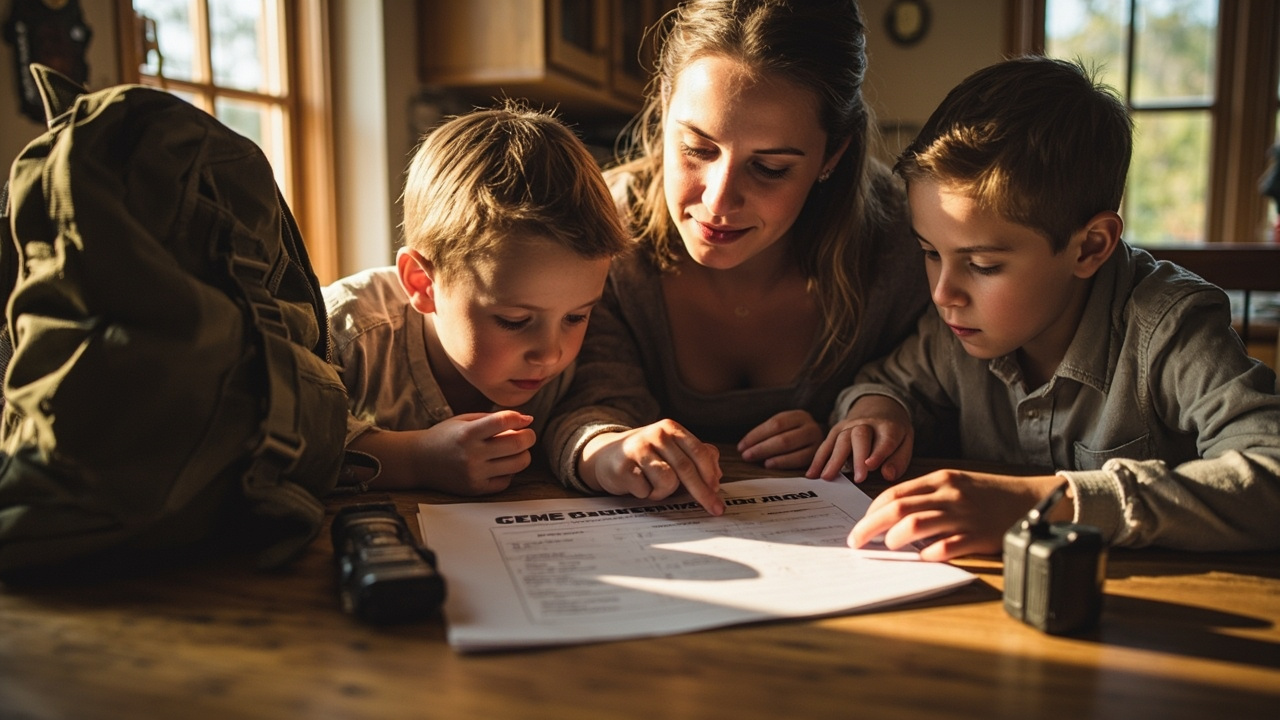
TL;DR: Write down how your household will receive warnings, shelter, evacuate, contact each other, and reunite — then practice it — because your family may not be together if a disaster strikes.
According to Make A Plan | Ready.gov, your family may not be together if a disaster strikes, so it is important to know which types of disasters could affect your area, know how you'll contact one another and reconnect if separated, and establish a family meeting place that's familiar and easy to find.
Start With the Five Planning Questions
According to Make A Plan | Ready.gov, put a plan together by discussing five questions with your family, friends or household to start your emergency plan.
Ask first how you will receive emergency alerts and warnings. Ask what your shelter plan is. Ask what your evacuation route is. Ask what your family and household communication plan is. Ask whether you need to update your emergency preparedness kit.
Those five questions set the shape of the work ahead. The warning question covers how alerts reach you when phones, power, or travel are disrupted. The shelter question covers where you stay safe. The evacuation question covers how you leave. The communication question covers how you reconnect if separated. The kit question connects the written plan to supplies you keep ready.
According to the Prepare My Family for a Disaster guide from Homeland Security, your plan should include how you will get to a safe place, how you will contact each other, how you will get back together, and what you will do in different situations. The same guide states it is also essential to have a disaster supplies kit that includes basic items from your home that you may need in case of emergency.
Know Your Local Risk and Warnings
Know which types of disasters could affect your area before you choose shelter and evacuation details, according to Make A Plan | Ready.gov.
According to Preparedness Starts at Home: Four Steps You Can Take Today | FEMA.gov, no matter what part of the U.S. you live in, there are disaster risks, and it is important to know what they are in your area so you can learn more about how to stay safe.
One way to do this is to check your state and local emergency management websites for tips on how to prepare, according to that FEMA guide. Another way is through the FEMA app, which lets you set up alerts specific to your area and learn more about the disasters common in those areas. You can also sign up for other types of emergencies and alerts that will help you stay informed, according to the same guide.
Ready.gov also offers Know Your Alerts and Warnings materials and Make a Plan graphics to help households understand warning options. Use those state, local, and app-based warning sources to answer the first planning question about how you will receive emergency alerts and warnings.
Set Your Shelter Plan and Evacuation Route
Your shelter plan answers where you will stay safe. Your evacuation route answers how you will leave when officials advise it.
The Homeland Security planning guide frames this as how you will get to a safe place and what you will do in different situations. Different situations can call for staying inside, going to a neighborhood location, leaving the neighborhood, or leaving town.
Decide on safe, familiar, accessible places where your family can go for protection or to reunite, according to Ready.gov's kids planning guide. Consider places in your house, in your neighborhood, and outside of your city or town so you're prepared for any situation.
If you have pets or service animals, think about animal-friendly locations when you choose those places, according to the same guide. That choice keeps reunions workable when animals travel with you.
Ready.gov also points households to an Emergency Plan for Commuters document and a Pet Owners document for travel and animal-specific planning situations. Households that commute or care for animals can use those supplements alongside the core shelter and evacuation answers.
Build a Contact Plan That Works When Separated
Knowing what to do before an emergency or disaster strikes can reduce stress and save both time and money, according to Preparedness Starts at Home: Four Steps You Can Take Today | FEMA.gov.
That stress reduction starts with a contact method everyone memorizes and carries. Pick the same person for each family member to contact, according to Ready.gov's kids planning guide. Pick someone out of town because they may be easier to reach in a disaster.
Text, don't talk, according to the same guide. In an emergency, phone lines may be tied up. It may be easier to text, and this leaves phone lines open for emergency workers.
On your own list or using the planning resources, write down your contacts and plans, according to that guide. Make sure everyone in the family has copies and keeps them in a safe space, like in a backpack, wallet, or taped in a notebook. Put them in your cell phone if you have one.
Ready.gov's main planning page directs families to create the written record with its fillable Family Emergency Plan form. Use that form to fill out information that can help your family be prepared, including household information, names and contacts of family members, meeting places, and medical information.
The related Family Emergency Communication Plan card, identified as FEMA P-1095, organizes household information, family member mobile numbers, other numbers or social media, email, and important medical or other information. It also organizes school, childcare, caregiver, and workplace emergency plans with address, emergency or hotline number, website, and emergency plan or pick-up details.
That card includes sections for an in-case-of-emergency contact and an out-of-town contact with name, mobile number, home number, email, and address. It includes emergency meeting places labeled indoor, neighborhood, out-of-neighborhood, and out-of-town with address and instructions. It includes important numbers or information for police, fire, poison control, doctors, pediatrician, dentist, medical insurance and policy numbers, hospital or clinic, pharmacy, homeowner or rental insurance and policy numbers, flood insurance and policy numbers, veterinarian, kennel, electric company, gas company, water company, alternate or accessible transportation, and other contacts.
Tailor the Plan to Your Household
As you prepare your plan, customize your plans and supplies to your specific daily living needs and responsibilities, according to Make A Plan | Ready.gov. Discuss how people in your network can assist each other with communication, care of children, business, pets, or other needs.
Consider the different ages of members within your household. Consider responsibilities for assisting others. Consider locations visited frequently. Consider dietary needs. Consider medical needs including prescriptions and equipment. Consider disabilities or access and functional needs including devices and equipment. Consider languages spoken. Consider cultural and religious considerations. Consider pets or service animals. Consider households with school-aged children.
According to the FEMA preparedness guide, keep these factors in mind when developing your plan: different ages of members within your household, ways to assist others, locations frequented, dietary needs, and medical needs including prescriptions and equipment.
Households with school-aged children should include school emergency and pick-up procedures in the written plan. Households with medical equipment, prescriptions, or assistive devices should list operating needs and support contacts in the network discussion. Households with dietary, language, cultural, or religious considerations should reflect those daily living needs in supplies and meeting arrangements.
Your family's needs change over time, so update your plan regularly, according to Ready.gov's kids planning guide. Review ages, schools, workplaces, childcare, caregivers, medical details, pets, and frequented locations each time you update.
Connect the Plan to Your Kit and Papers
Do not leave the kit question for later. Ask whether you need to update your emergency preparedness kit as part of the first family discussion, according to Make A Plan | Ready.gov.
Having enough food, water, and medicine can help you stay safe and comfortable until help arrives, according to the FEMA preparedness guide. Having what you need can prevent injury, help you stay safe and comfortable, and prevent damage to your home.
Build a go-bag with all the essentials you might need, so you don't need to scramble in an evacuation situation, according to the same guide. In addition to food and water, consider including a battery-powered or hand crank radio and a NOAA Weather Radio with tone alert, a flashlight, a first aid kit, extra batteries, a whistle to signal for help, a dust mask to help filter contaminated air, plastic sheeting with scissors and duct tape to shelter in place, moist towelettes with garbage bags and plastic ties for personal sanitation, a wrench or pliers to turn off utilities, a manual can opener for food, and local maps.
Find the full supply list through Build A Kit materials referenced on FEMA.gov. Ready.gov also lists 12 Ways to Prepare materials, Low and No Cost Preparedness graphics, Tips for Medications graphics, Save Important Documents to the Cloud graphics, Document and Insure Your Property materials, Safeguard Critical Documents and Valuables materials, an Emergency Financial First Aid Kit, and a Consumer Financial Protection Bureau Disaster Checklist for property, medical, and financial paperwork.
Practice Together and Stay Involved
Practice your plan with your household, according to Make A Plan | Ready.gov. Hold regular household meetings to review and practice your plan, according to Ready.gov's kids planning guide.
Use practice to test the out-of-town contact, the texting approach, and each meeting place. Confirm that every person can reach the indoor location, the neighborhood location, the out-of-neighborhood location, and the out-of-town location. Confirm that school, childcare, caregiver, and workplace pick-up steps still match current addresses and hotline numbers.
Emergencies can happen fast, and emergency responders aren't always nearby, according to the FEMA preparedness guide. You may be able to save a life by learning ways to quickly help in these types of situations.
You can do this by taking a first aid class through nonprofit organizations or local government groups, according to the same guide. You can also consider joining a Community Emergency Response Team and get trained on basic disaster response skills, such as fire safety, light search and rescue, team organization, and disaster medical operations.
Make a plan today, as Ready.gov advises. Write the contacts, meeting places, shelter steps, evacuation route, and kit checks down, give every family member a copy, and review the document when household needs change.