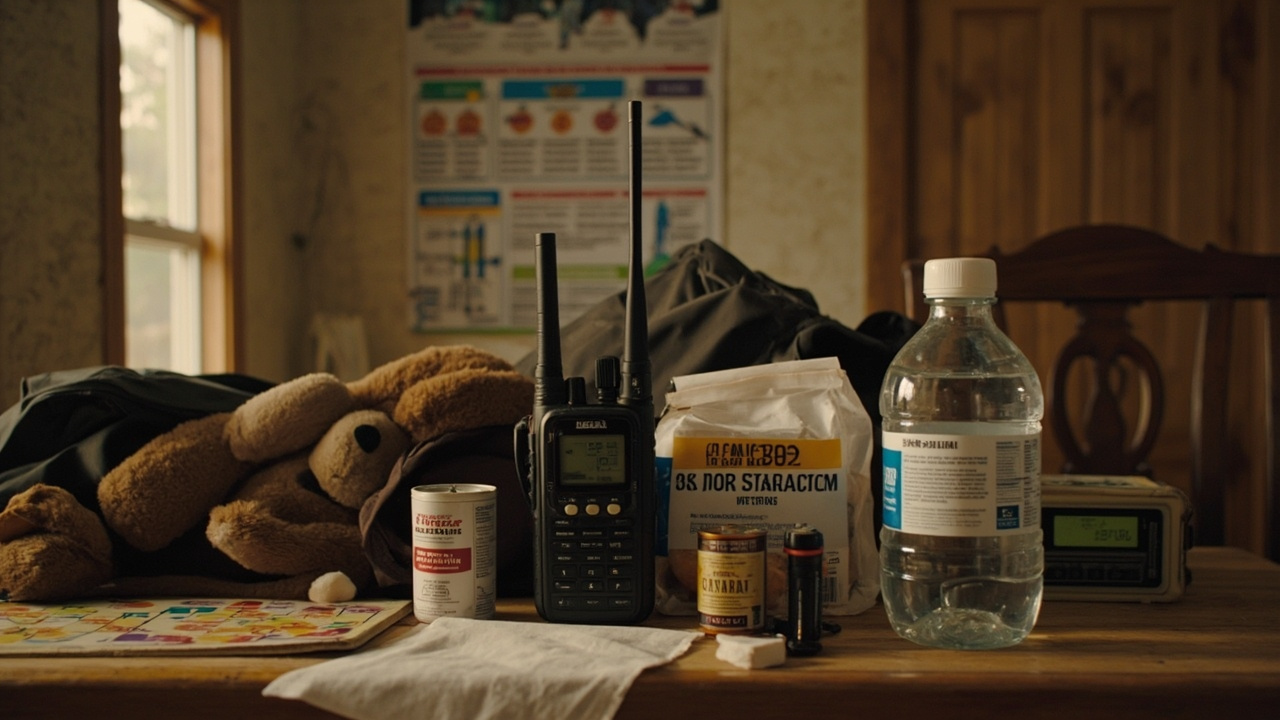
TL;DR: Build a 72-hour kit, write a family communications plan, and get severe-weather alerts in at least three ways so you can act fast for tornadoes, floods, and winter storms.
Last updated on Ready.gov on 05/11/2026, the federal severe-weather page states that severe weather can happen anytime, in any part of the country, according to Severe Weather | Ready.gov.
Know which hazards threaten your home
Start by naming the hazards that affect you where you live. Federal guidance lists tornadoes, floods, thunder and lightning, and winter weather as core risk types to understand.
Thunderstorm hazards include damaging winds, tornadoes, large hail, flooding and flash flooding. Winter hazards include freezing rain, sleet, snow and strong winds.
Your county determines the mix. To learn which hazards can affect you, contact the National Weather Service office in Peachtree City, your local emergency management office, or a local Red Cross chapter, as described by the Family Preparedness for Severe Weather Hazards page from the National Weather Service Atlanta/Peachtree City office.
You can also look up local conditions with FEMA's National Risk Index, an interactive tool anyone can use to improve understanding of natural hazard risk where they live, according to Evacuation | Ready.gov. Many states have designated evacuation zones and predetermined evacuation routes. Learn state and local plans by visiting state and county emergency management websites.
Know the alert vocabulary before skies change. According to the Severe Weather Safety Social Media Toolkit | Ready.gov, watches mean severe weather is possible, while warnings mean severe conditions have begun or will begin soon. Timely information on weather conditions can make a big difference, so learn about alerts and warnings at Ready.gov/alerts.
Get a kit you can grab in minutes
Assemble a group of items you may need during a disaster and keep them grouped together. That grouping lets you quickly grab your kit and leave if an evacuation is ordered for your area.
Plan for at least 72 hours of food and water for each person and your pets. Emergency workers sometimes cannot reach you immediately, so you may need to survive on your own for that period.
Assume basic services such as electricity and water may not be available. Include items that help you manage through that loss of services.
Disasters are hard on adults and children. Include comforting items in your kit, whether it is a teddy bear or a game for a child or comfort and stress foods for adults.
For a downloadable emergency supply kit checklist, visit FEMA at Ready.gov. The toolkit guidance also calls for emergency supplies in place at home, at work, and in the car, and for listening to local officials.
Pack an emergency kit for each person and pet traveling in your car in case evacuations are ordered. Detailed car-supply guidance is posted at ready.gov/car. Keep a portable emergency kit in the car at all times.
Tornadoes cause high winds which can knock out power. Gather supplies for each household member with that outage in mind. Check insurance policies to ensure you have enough coverage before severe weather hits.
Make a written family emergency plan
Develop an emergency plan based on your local weather hazards and practice your plan. You can fill out your Family Emergency Plan through Ready.gov.
Make sure you know what to do when severe weather strikes. Create a communications plan with your family before severe weather hits. Have a family plan that includes an emergency meeting place and related information.
If you get separated from family, make sure you have a place to meet or have an out-of-town contact to let know you are okay. Come up with a family and household plan to stay in touch in case you become separated, have a meeting place, and update it depending on the circumstance.
If time allows during an evacuation, call or email the out-of-state contact in your family communications plan and tell them where you are going. Leave a note telling others when you left and where you are going.
Involve children in the plan-making process. Sesame Street materials can help kids be ready for a disaster. Talk with your kids about preparedness and review Ready.gov/kids together.
Also inquire about emergency plans at work and school. Make sure your business has a preparedness plan, with business guidance posted at ready.gov/business.
Get watches, warnings and advisories three ways
Receive alerts and warnings in multiple ways. These are practical options to combine for home coverage:
Have a NOAA Weather Radio. Make sure it is plugged in, turned on, and have extra batteries just in case the power goes out. A key benefit of NOAA Weather Radio is it will alert you while you are sleeping so you can take shelter.
Wireless Emergency Alerts, known as WEA, are a nationwide text emergency alert system which will send an automated alert to your mobile device when significant weather threatens, including Tornado Warning and Flash Flood Warning events. No sign-up is required for those automatic texts.
Check the forecast regularly to see if you are at risk for tornadoes. Listen to local news or a NOAA Weather Radio to stay informed about tornado watches and warnings, according to Prepare! Don't let Tornadoes Take You by Surprise.
Check with your local emergency manager to see if there are sirens in your area. Learn the policy specific to your area and remember that sirens are an outdoor warning system and are not designed to be heard indoors. Know how your community sends warnings because some communities have outdoor sirens while others depend on media and smart phones to alert residents of severe storms capable of producing tornadoes.
Local television and radio stations also broadcast severe weather watches and warnings in on-screen scrolls. Those scrolls are not controlled by the National Weather Service.
Sign up for alerts from local emergency management agencies and the National Weather Service, which will provide updates on threat conditions, shelter locations, and other important safety information. Download the FEMA App where you can receive real-time weather alerts, locate emergency shelters in your area, and prepare for common hazards.
Choose a tornado protective location now
Practice moving quickly to a protective location in the places where you spend a lot of time. Conduct a family severe thunderstorm drill regularly so everyone knows what to do if a tornado is approaching.
The best protective location in a tornado is a FEMA safe room or storm shelter built to International Code Council 500 Standards. Consider installing a safe room built to FEMA standards and consider having your safe room reinforced.
Without a safe room or storm shelter, get to a sturdy building with a small, interior, windowless room on the lowest level, with a basement best. Pick a safe room in your home, such as a basement, storm cellar, or an interior room on the lowest floor with no windows.
Make sure all members of your family know to go there when tornado warnings are issued. Do not forget pets if time allows.
If you live in a mobile home or home without a basement, identify a nearby safe building you can get to quickly, such as a church or family member. More ideas for your family plan are posted at ready.gov/make-a-plan.
You may not always receive an official tornado alert, so know the warning signs. A funnel cloud, loud roar, and change in sky color are among the warning signs listed at ready.gov/tornadoes, and lightning and hail are common in tornado weather.
Plan evacuation destinations, routes and go-bags
Know when and where to go. Whether it is the home of a friend or family member or a pre-designated shelter, know your evacuation destination in advance.
Identify several places you could go in an emergency such as a friend's home in another town or a motel. Choose destinations in different directions so you have options during an emergency. Learn your evacuation routes today in case you are directed to leave by local authorities.
Evacuate if advised by local authorities. Leave early enough to avoid being trapped by severe weather. Follow recommended evacuation routes and do not take shortcuts because they may be blocked.
Build a go-bag with essentials so you do not need to scramble. Make sure everyone in your household knows where the bag is stored and who is responsible for it. Assemble supplies that are ready for evacuation and prepare a bag you can carry when you evacuate on foot or public transportation, plus supplies for traveling longer distances if you have a car.
If you do not have a car, plan how you will leave if needed. Decide with family, friends or your local emergency management office what resources may be available. During an active disaster, download the FEMA app for a list of open shelters in your local area. Check with local officials about what shelter spaces are available.
If you have a car, keep a full tank of gas if an evacuation seems likely. Keep a half tank of gas in it at all times in case of an unexpected need to evacuate. Gas stations may be closed during emergencies and unable to pump gas during power outages. Plan to take one car per family to reduce congestion and delay.
Protect people, pets and property on exit
Take your emergency supply kit when you leave. Listen to a battery-powered radio and follow local evacuation instructions.
Take your pets with you but understand that only service animals may be allowed in public shelters. If needed, identify a place to stay that will accept pets, because most public shelters allow only service animals. Plan how you will care for your pets in an emergency now.
Be familiar with alternate routes and other means of transportation out of your area. Always follow the instructions of local officials and remember that your evacuation route may be on foot depending on the type of disaster.
Secure your home by closing and locking doors and windows. Unplug electrical equipment such as radios, televisions and small appliances. Leave freezers and refrigerators plugged in unless there is a risk of flooding. If there is damage to your home and you are instructed to do so, shut off water, gas and electricity before leaving.
Wear sturdy shoes and clothing that provides some protection such as long pants, long-sleeved shirts and a hat. Check with neighbors who may need a ride. Be alert for road hazards such as washed-out roads or bridges and downed power lines. Do not drive into flooded areas.
The toolkit message is direct for flooded roads, paths or walkways: Turn Around, Don't Drown. If you approach a flooded road, follow that rule because it may save your life. If you are already on high ground during a flood, stay where you are with supplies already stored.
After an evacuation, check with local officials both where you are staying and back home before you travel. If you are returning to disaster-affected areas after significant events, prepare for disruptions to daily activities and remember that returning home before storm debris is cleared is dangerous. Avoid downed power or utility lines because they may be live with deadly voltage. Stay away and report them immediately to your power or utility company.