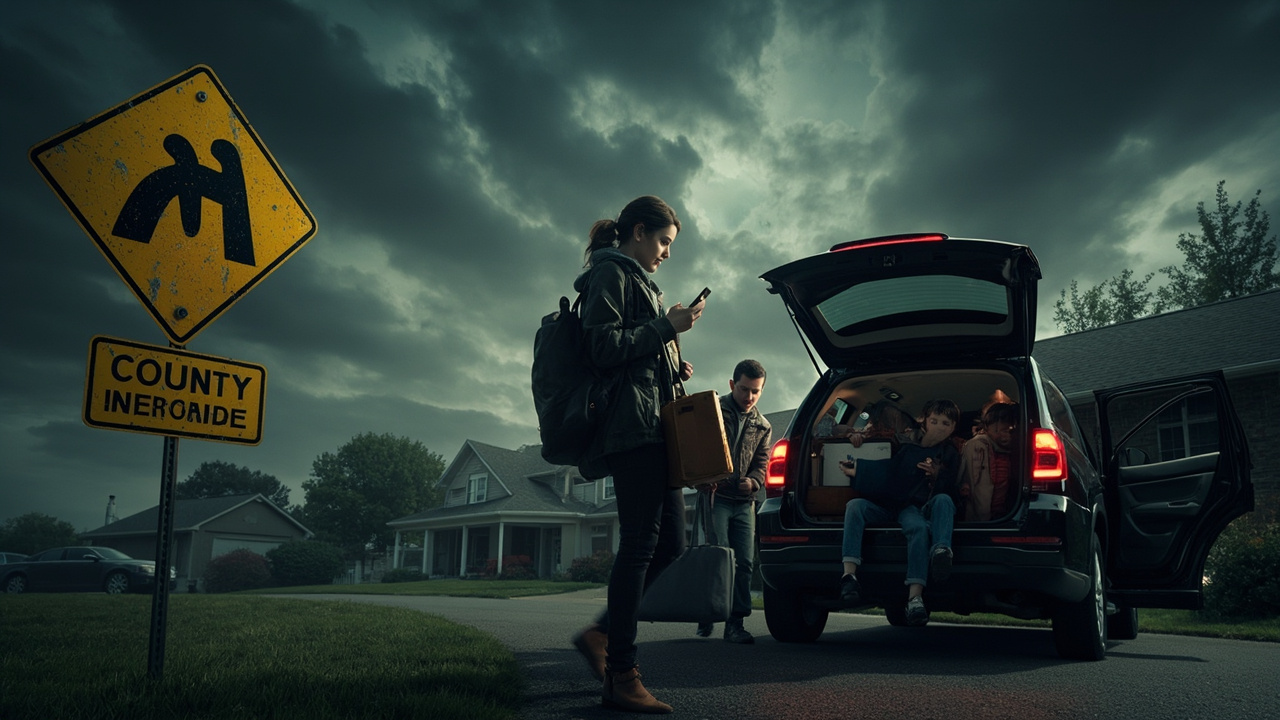
TL;DR: An evacuation order is a directive from state, local, tribal or territorial authorities to leave a specific area immediately because of imminent danger, and city or county emergency management websites are the most reliable source for updates.
What an evacuation order means for your family
According to FAQ: What is an evacuation order and where can I get updates on orders for my area? | FEMA.gov, an evacuation order is issued by local authorities to direct people to leave a specific area due to an immediate danger. A companion federal explainer, FAQ: What is an evacuation order and what should I do? | FEMA.gov, describes the same directive as coming from state, local, tribal and territorial authorities when danger is imminent.
Following evacuation orders protects your life and safety. The companion federal explainer calls the order a crucial safety measure to protect lives and property.
When an evacuation order is issued, evacuate immediately. Do not delay. Leave the designated area as quickly and safely as possible.
Follow the specific instructions provided by local authorities. Those instructions control where to go, which route to use, and what local conditions require.
Secure your home by closing windows and doors, turning off utilities, and moving valuables to higher ground. Take essential items like medications, important documents and medical equipment.
Stay informed by monitoring local news and weather updates for the latest information on the situation. Do not return home until authorities say it is safe or declare it safe.
Where to get official updates for your area
City or county emergency management websites are the most reliable source for official evacuation orders and updates. Check those sites first before relying on forwarded posts or neighborhood rumors.
TV, radio and local news websites often provide real-time updates. Listen to a battery-powered radio and follow local evacuation instructions if power or internet service is interrupted.
Official social media accounts of local government agencies and emergency management organizations also carry order information. Use those accounts to confirm boundaries, shelter openings, and changes to instructions.
Sign up to receive Wireless Emergency Alerts on your phone. Ensure your phone is enabled for those alerts so a locally targeted message can reach you.
To learn more, visit Ready.gov: Evacuation. That portal connects evacuation planning, alert enrollment, and shelter information in one place.
Be in the know before an order arrives
According to Evacuation | Ready.gov, knowledge in an emergency can be lifesaving. The site urges households to “Be in the Know” to evacuate safely.
Know your risks
It is important to understand your location’s risks because no two communities face the same extreme weather conditions. You can find your local risks with FEMA’s National Risk Index.
The National Risk Index is an interactive tool anyone can use to improve understanding of natural hazard risk where they live so they can take action to protect themselves. Learn the types of disasters that are likely in your community and the local emergency, evacuation and shelter plans for each specific disaster.
Know when and where to go
Whether it is the home of a friend or family member or a pre-designated shelter, know your evacuation destination. Having these plans in place can save valuable time and, most importantly, lives.
Many states have designated evacuation zones and predetermined evacuation routes. Learn your state and local plans by visiting your state and county emergency management websites.
Plan how you will leave and where you will go if you are advised to evacuate. Identify several places you could go in an emergency such as a friend’s home in another town or a motel. Choose destinations in different directions so that you have options during an emergency.
Check with local officials about what shelter spaces are available for this year. If needed, identify a place to stay that will accept pets. Most public shelters allow only service animals.
Be familiar with alternate routes and other means of transportation out of your area. Always follow the instructions of local officials and remember that your evacuation route may be on foot depending on the type of disaster.
Know what to bring
Build a go-bag with all the essentials you might need, so you do not need to scramble in an evacuation situation. Find a list of supplies at Build A Kit.
Make sure everyone in your household knows where the bag is stored, and who is responsible for it in the event of an emergency. Pack a go-bag with essential items, medications, important documents, and related necessities.
Assemble supplies that are ready for evacuation. Prepare a “go-bag” you can carry when you evacuate on foot or public transportation and supplies for traveling longer distances if you have a car.
If you do not have a car, plan how you will leave if needed. Decide with family, friends or your local emergency management office to see what resources may be available.
How alerts reach your phone, radio and TV
According to Emergency Alerts | Ready.gov, public safety officials use timely and reliable systems to alert you when emergencies strike. That page was last updated 05/27/2026.
Wireless Emergency Alerts
Wireless Emergency Alerts are short emergency alerts authorities can send to any WEA-enabled mobile device in a locally targeted area. Alerting Authorities who are authorized to send them include state, local, tribal and territorial public safety officials, the National Weather Service, the National Center for Missing and Exploited Children and the President of the United States.
Those messages look like text messages but are designed to get your attention with a unique sound and vibration repeated twice. They are not affected by network congestion and will not disrupt texts, calls or in-progress data sessions.
You are not charged for receiving them, and there is no need to subscribe. They are sent through FEMA’s Integrated Public Alert and Warning System.
Children will also receive alerts on their WEA-enabled mobile devices. Parents and guardians are advised to talk to children about those messages and staying safe in an emergency.
If you are not receiving them, check the settings on your mobile device and review your user manual. Older phones may not be WEA capable, and some cell phone models require you to enable the feature. Some mobile service providers call these messages “Government Alerts” or “Emergency Alert Messages.”
Check with your wireless provider to see if it can resolve the issue. All major phone providers and some smaller providers participate in the program. To provide comments or concerns about messages sent in your area, contact local officials directly.
Emergency Alert System and weather radio
The Emergency Alert System is a national public warning system that allows the president to address the nation within 10 minutes during a national emergency. Other authorized federal, state, local, tribal and territorial alerting authorities may use the system to deliver important emergency information such as weather information, imminent threats, AMBER alerts and local incident information targeted to specific areas.
The system is sent through broadcast TV and radio, satellite digital audio services, direct broadcast satellite providers, cable television systems and wireless cable systems. The president has sole responsibility for determining when the national-level system will be activated. FEMA and the Federal Communications Commission are responsible for national-level tests and exercises. The system is also used when all other means of alerting the public are unavailable.
National Oceanic and Atmospheric Administration Weather Radio All Hazards is a nationwide network of radio stations that broadcast continuous weather information from the nearest National Weather Service office based on your physical location. It broadcasts official warnings, watches, forecasts and other hazard information 24 hours a day, seven days a week. It also broadcasts alerts of non-weather emergencies such as national security or public safety threats through the Emergency Alert System.
Integrated alert network and FEMA App
The Integrated Public Alert and Warning System is FEMA’s national system for local alerting. It gives federal, state, local, tribal and territorial public safety agencies the ability to send Wireless Emergency Alerts, Emergency Alert System alerts, weather and non-weather-related emergency messages simultaneously through NOAA weather radios and alerts through systems like sirens and digital billboards.
That network empowers local Alerting Authorities to send their own emergency alerts. FEMA does not review, edit or approve alerts. There are no costs to receive or send alerts sent through the network. Alerting Authorities may incur minimal costs to purchase compatible software. Alerts can be locally targeted to ensure only devices in the affected area receive the alert.
The FEMA App allows you to receive real-time weather and emergency alerts, send notifications to loved ones, locate emergency shelters in your area, get preparedness strategies and more. You can receive real-time weather and emergency alerts from the National Weather Service for up to five locations nationwide. You can find a nearby shelter if you need to evacuate to a safe space. You can find out if your location is eligible for FEMA assistance, find Disaster Recovery Center locations, and get answers to pressing questions.
Identify where you can access reliable information so you can make informed decisions before, during, and after a disaster. Sign up for alerts from your local emergency management agencies and the National Weather Service, which will provide updates on threat conditions, shelter locations, and other important safety information. Download the FEMA App where you can receive real-time weather alerts, locate emergency shelters in your area, prepare for common hazards, and more.
What to do during the evacuation
Download the FEMA app for a list of open shelters during an active disaster in your local area. Take your emergency supply kit.
Leave early enough to avoid being trapped by severe weather. Take your pets with you but understand that only service animals may be allowed in public shelters. Plan how you will care for your pets in an emergency now.
If time allows, call or email the out-of-state contact in your family communications plan. Tell them where you are going.
Secure your home by closing and locking doors and windows. Unplug electrical equipment such as radios, televisions and small appliances. Leave freezers and refrigerators plugged in unless there is a risk of flooding. If there is damage to your home and you are instructed to do so, shut off water, gas and electricity before leaving.
Leave a note telling others when you left and where you are going. Wear sturdy shoes and clothing that provides some protection such as long pants, long-sleeved shirts and a hat. Check with neighbors who may need a ride.
Follow recommended evacuation routes. Do not take shortcuts, they may be blocked. Be alert for road hazards such as washed-out roads or bridges and downed power lines. Do not drive into flooded areas.
Car readiness and household coordination
According to Evacuation | Ready.gov, if you have a car, keep a full tank of gas if an evacuation seems likely. Keep a half tank of gas in it at all times in case of an unexpected need to evacuate.
Gas stations may be closed during emergencies and unable to pump gas during power outages. Plan to take one car per family to reduce congestion and delay. Make sure you have a portable emergency kit in the car.
Come up with a family or household plan to stay in touch in case you become separated; have a meeting place and update it depending on the circumstance.
What to do after the evacuation
If you evacuated for the storm, check with local officials both where you are staying and back home before you travel.
If you are returning to disaster-affected areas, after significant events prepare for disruptions to daily activities and remember that returning home before storm debris is cleared is dangerous.
Let friends and family know before you leave and when you arrive. Charge devices and consider getting back-up batteries in case power outages continue. Fill up your gas tank and consider downloading a fuel app to check for outages along your route. Bring supplies such as water and non-perishable food for the car ride.
Avoid downed power or utility lines, they may be live with deadly voltage. Stay away and report them immediately to your power or utility company.
How to find local officials and disaster status
According to Search Your Location | FEMA.gov, the most important information about disasters and emergency management comes from your local officials and community leaders. Local governments plan, prepare and respond to disasters with the support of the state and federal governments.
That location search was last updated December 20, 2023. It can show active and past disaster declarations, helpful resources specific to your state or territory such as how to get in touch with local emergency management offices, and the latest news releases, fact sheets and other communications around disasters and emergencies in your location.