TL;DR: Build a carryable go-bag, pick destinations in different directions, and follow local officials using alerts from the National Weather Service and the FEMA App if evacuation is advised.
Why evacuation planning starts before warnings
According to Evacuation | Ready.gov, knowledge supports lifesaving decisions in an emergency, which is why the page organizes preparation under “Be in the Know.” The page was published on March 20, 2026, and directs readers to check local risks through FEMA’s National Risk Index.
The same guide explains that no two communities face the same extreme weather conditions. Readers can use the National Risk Index, described as an interactive tool anyone can use, to improve understanding of natural hazard risk where they live and take action to protect themselves.
For hurricanes, Hurricanes | Ready.gov lists Eastern Pacific Hurricane Season as May 15-November 30, Atlantic Hurricane Season as June 1-November 30, and Central Pacific Typhoon Season as June 1-November 30. The hurricane page states that hurricanes can happen along any U.S. coast or in any territory in the Atlantic or Pacific oceans, and that storm surge historically is the leading cause of hurricane-related deaths in the United States.
Know when and where to go
Pick a destination ahead of time
The evacuation guide says to know an evacuation destination, whether it is the home of a friend or family member or a pre-designated shelter. It adds that having these plans in place can save valuable time and lives.
Before an evacuation, the guide advises planning how you will leave and where you will go if evacuation is advised. It also advises learning the types of disasters likely in the community and the local emergency, evacuation and shelter plans for each specific disaster.
Learn zones, routes and local plans
Many states have designated evacuation zones and predetermined evacuation routes, according to the guide. Readers are directed to learn state and local plans by visiting state and county emergency management websites.
The guide also says to be familiar with alternate routes and other means of transportation out of the area. It states to always follow instructions of local officials and remembers that an evacuation route may be on foot depending on the type of disaster.
According to Make A Plan | Ready.gov, which shows a last update of 09/01/2026, households should answer what their shelter plan is and what their evacuation route is. That planning page also lists how emergency alerts and warnings will be received, what the family and household communication plan is, and whether the emergency preparedness kit needs updating.
Know what to bring and who carries it
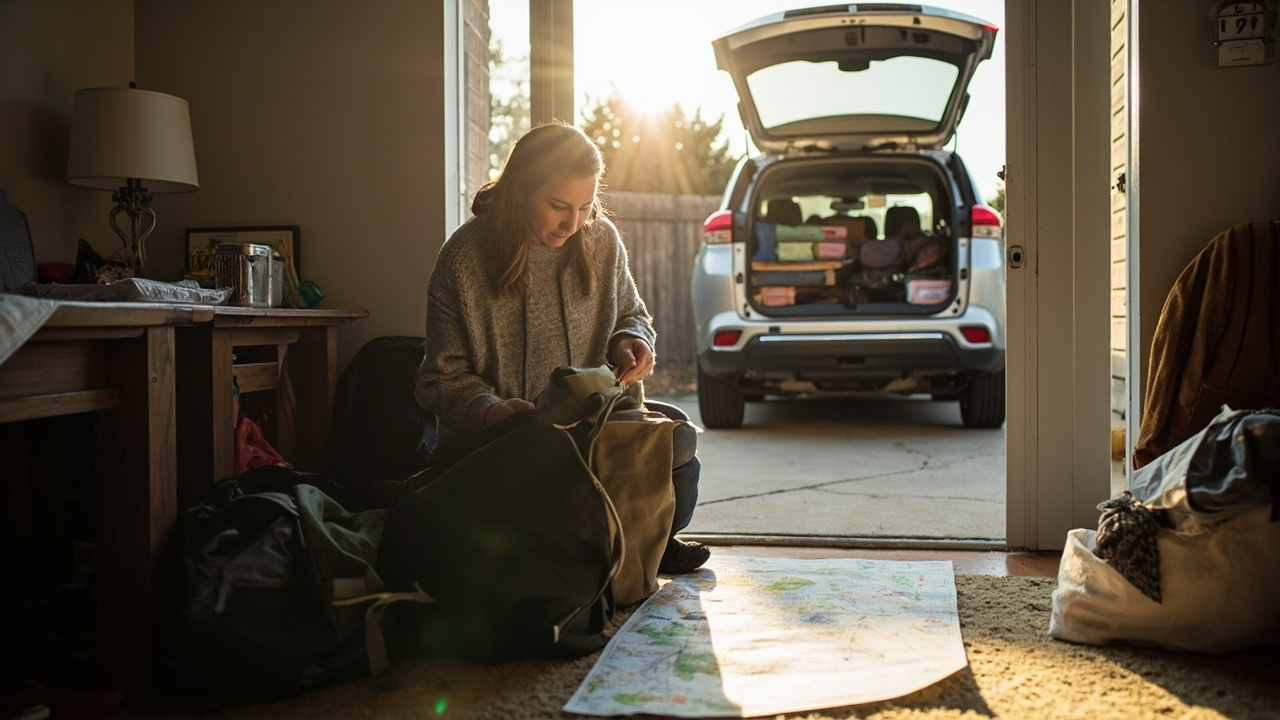
Build a carryable go-bag
The evacuation guide says to build a go-bag with essentials needed so there is no scramble in an evacuation situation. It points to Build A Kit for a list of supplies.
The guide specifies assembling supplies that are ready for evacuation. It calls for preparing a “go-bag” that can be carried when evacuating on foot or public transportation and supplies for traveling longer distances with a car.
The guide also says to make sure everyone in the household knows where the bag is stored and who is responsible for it in an emergency. During an evacuation, the instruction is to take the emergency supply kit.
What the kit guidance adds
The hurricane page says to gather supplies for the household and to include medication, disinfectant supplies and pet supplies in a go bag or car trunk. It warns that access to these supplies may be unavailable for days or even weeks after a hurricane.
The evacuation guide says that if there is a car, the household should make sure there is a portable emergency kit in the car. For return travel, it says to bring supplies such as water and non-perishable food for the car ride.
Know your information sources
Alerts, apps and radios
The evacuation guide says to identify where reliable information can be accessed so informed decisions can be made before, during and after a disaster. It says keeping up to date with latest developments can save lives.
Specifically, it says to sign up for alerts from local emergency management agencies and the National Weather Service. Those alerts will provide updates on threat conditions, shelter locations and other important safety information.
It also says to download the FEMA App, where users can receive real-time weather alerts, locate emergency shelters in the area, prepare for common hazards and more. During an active disaster, the guide says to download the FEMA app for a list of open shelters in the local area.
During movement, the guide says to listen to a battery-powered radio and follow local evacuation instructions. After movement, it says to charge devices and consider getting back-up batteries in case power outages continue.
Before evacuation: household, pets and vehicles
Household contacts and meeting places
The guide says to come up with a family and household plan to stay in touch in case of separation, to have a meeting place and to update it depending on circumstance. If time allows during evacuation, it says to call or email the out-of-state contact in the family communications plan and tell that contact where you are going.
The planning page says a family may not be together if a disaster strikes, so it is important to know which types of disasters could affect the area. It also says to know how household members will contact one another and reconnect if separated, and to establish a family meeting place that is familiar and easy to find.
Shelters, destinations and pets
Before evacuation, the guide says to check with local officials about what shelter spaces are available for this year. It says to identify several places that could be used in an emergency, such as a friend’s home in another town or a motel, and to choose destinations in different directions so options remain during an emergency.
If needed, the guide says to identify a place to stay that will accept pets. It states that most public shelters allow only service animals. During evacuation, it says to take pets, but understands that only service animals may be allowed in public shelters, and to plan now how pets will be cared for in an emergency.
Cars, fuel and no-car planning
If there is a car, the guide says to keep a full tank of gas if evacuation seems likely. It says to keep a half tank of gas at all times in case of an unexpected need to evacuate. It explains that gas stations may be closed during emergencies and unable to pump gas during power outages.
The guide also says to plan to take one car per family to reduce congestion and delay. For households without a car, it says to plan how departure will happen if needed and to decide with family, friends or the local emergency management office what resources may be available.
During evacuation: home, clothing and roads
Secure the home and leave a note
The guide says to secure the home by closing and locking doors and windows. It says to unplug electrical equipment such as radios, televisions and small appliances, while leaving freezers and refrigerators plugged in unless there is a risk of flooding.
It adds that if there is damage to the home and residents are instructed to do so, they should shut off water, gas and electricity before leaving. It also says to leave a note telling others when departure happened and where the household is going.
Dress, neighbors and timing
The guide says to leave early enough to avoid being trapped by severe weather. It says to wear sturdy shoes and clothing that provides some protection, such as long pants, long-sleeved shirts and a hat.
It also says to check with neighbors who may need a ride. The hurricane page separately says to check with neighbors, senior adults or those who may need additional help securing hurricane plans to see how assistance can be offered.
Routes and flooded roads
The guide says to follow recommended evacuation routes and not to take shortcuts because they may be blocked. It says to be alert for road hazards such as washed-out roads or bridges and downed power lines.
It explicitly says not to drive into flooded areas. The hurricane guidance for evacuation zones says that if residents live in a mandatory evacuation zone and local officials tell them to evacuate, they should do so immediately.
After evacuation: return safely
Confirm it is safe to travel
The guide states that if evacuation was for the storm, check with local officials both where you are staying and back home before traveling. If returning to disaster-affected areas after significant events, it says to prepare for disruptions to daily activities.
It also warns that returning home before storm debris is cleared is dangerous. The planning emphasis remains on official instructions rather than assumptions about road conditions.
Fuel, food and power hazards
For the return, the guide says to let friends and family know before leaving and when arriving. It says to fill up the gas tank and consider downloading a fuel app to check for outages along the route.
It says to avoid downed power or utility lines because they may be live with deadly voltage. It says to stay away and report them immediately to the power or utility company. It begins generator guidance with only using generators outside, and the visible text stops there.
Documents, insurance and practice
The hurricane page says to make sure insurance policies and personal documents, such as ID, are up to date. It says to make copies and keep them in a secure password-protected digital space.
The planning page says to document the plan using its fillable family emergency plan form, including household information, names and contacts, meeting places and medical information. It also says to practice the plan with the household, and lists added resources for medications, critical documents, commuters, pet owners and financial first aid.