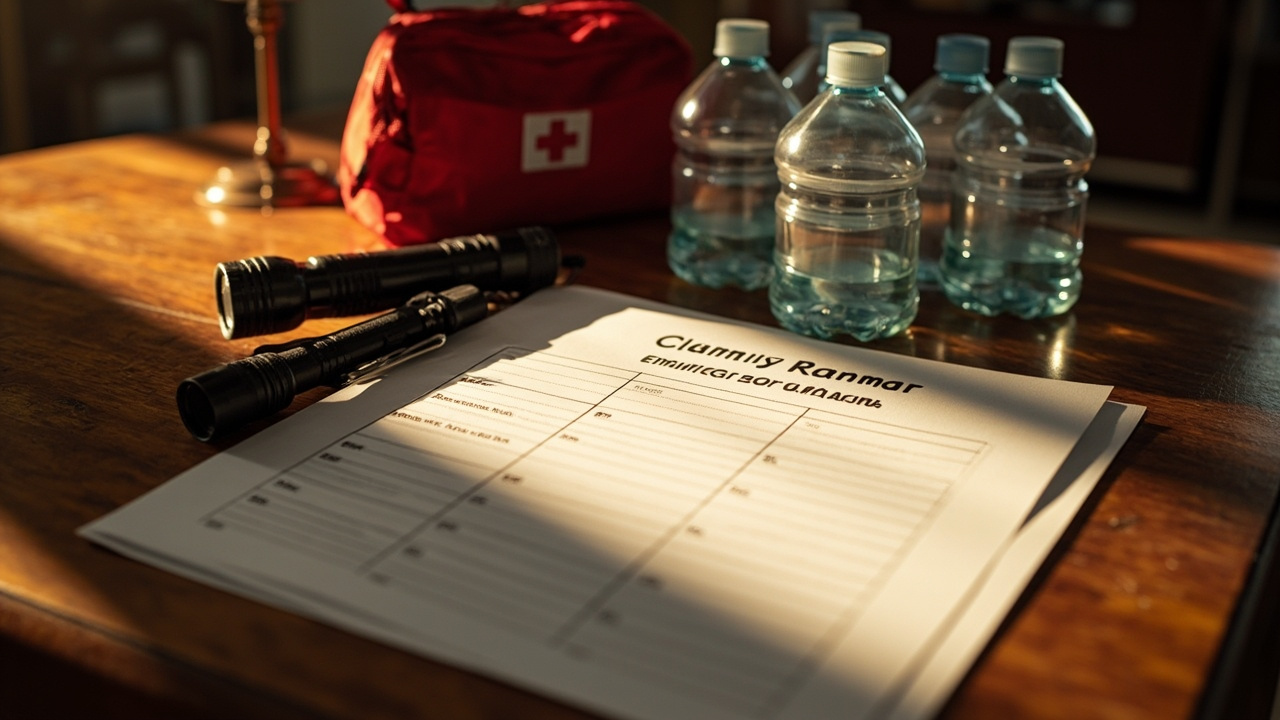
TL;DR: Build a written household emergency plan that covers how you will get alerts, where you will shelter, how you will evacuate, and how you will reconnect if separated.
Your family may not be together if a disaster strikes, so federal guidance urges households to make a plan today, according to Make A Plan | Ready.gov. That page, last updated 09/01/2026, frames planning around local hazards, contact methods, reunion steps, and a familiar meeting place that is easy to find.
Start With Local Hazards And Reunion Basics
The first task is learning which types of disasters could affect your area, according to Make A Plan | Ready.gov. Household members need a shared understanding of how they will contact one another and reconnect if separated.
Establish a family meeting place that is familiar and easy to find. The guidance presents that choice as a core part of being ready for separation during a disaster.
Planning also assumes you may need supplies in more than one place. According to Plan for Locations | Ready.gov, many emergencies and disasters occur without any warning, and you cannot predict where you will be when one happens. That source, last updated 04/29/2026, advises having plans and supplies for places household members visit regularly, so everyone knows what to do and has what is needed to stay safe wherever they are.
Step 1: Hold A Household Planning Meeting
Step 1 is meeting with family, friends, or household members and discussing five planning questions to start the emergency plan, according to Make A Plan | Ready.gov.
Those five starting questions address alerts, shelter, evacuation, communication, and kits:
- How alerts and warnings will be received
- What the shelter plan will be
- What the evacuation route will be
- What the family or household communication plan will be
- Whether the emergency preparedness kit needs to be updated
The meeting format is intentional. It brings everyday responsibilities into the same conversation as shelter and evacuation, rather than treating communication as a separate task.
For households that use shared transportation or commute separately, related federal material points to a commuter planning aid. According to Plan for Locations | Ready.gov, travelers can download the Commuter Emergency Plan for movement between work, home, and other commonly visited locations.
Step 2: Tailor The Plan To Daily Needs
Step 2 is assessing household needs and customizing plans and supplies to specific daily living needs and responsibilities, according to Make A Plan | Ready.gov. The same guidance asks households to discuss how people in their network can assist each other with communication, care of children, business, pets, or other needs.
Customization starts with who lives in the home and what support they require. Age differences within the household matter, as do responsibilities for assisting other people. Frequently visited locations should be factored into the plan because routines affect where members may be during an event.
Health-related needs require explicit entries. The guidance lists dietary needs alongside medical needs, including prescriptions and equipment. It also lists disabilities or access and functional needs, including devices and equipment, as a separate planning factor.
Household communication capacity also affects the design. Languages spoken are listed as a planning consideration, along with cultural and religious considerations. Those factors influence contact methods, written instructions, meeting arrangements, and care decisions.
Animals and school routines complete the household picture. The guidance lists pets or service animals as a planning factor and separately lists households with school-aged children. Both affect transportation, shelter choices, supervision, and supply needs.
Plan For The Places You Go Regularly
Location planning extends the household plan beyond the home address, according to Plan for Locations | Ready.gov. The source advises finding out what plans are available for locations visited regularly and customizing personal and household plans around what each member would do if an emergency happened there.
The location list named in that guidance includes home, workplace, vehicles, regular transportation methods such as trains and urban commuter transit, school and daycare, places of worship, sports arenas and playing fields, entertainment locations such as theatres, shopping areas such as malls and retail centers, and tourist and travel locations such as hotels.
For each location, the guidance advises obtaining information about the organization or building managers' plans. If plans are not available, households may need to work with a building manager or other members of the organization to develop or expand plans.
Five information categories are highlighted for location plans: local alerts or warnings available at the location, building alarm or alert systems, building evacuation plans including alternate exits, building or organization shelter-in-place plans, and supplies needed for temporary sheltering.
Building and surroundings change the details. The source notes that single-story, multi-story, and high-rise buildings have different alarm, shelter, and evacuation considerations. Urban and rural locations may have different local assumptions and plans for evacuation when large areas are affected. Schools, sports arenas, and malls have different safety plans depending on construction and the type of emergency.
Outdoor and hazard-prone settings need extra attention. Outdoor locations such as sports fields or golf courses need specific plans for rapid short-term shelter for events such as thunderstorms and lightning or tornadoes. Geography may be critical for some hazards, for example where an area is low and vulnerable to flash flooding. Mobile homes, modular structures, and other buildings not attached to permanent foundations require planning for evacuation and alternate shelter locations.
Step 3: Write It Down On The Federal Form
Step 3 is documenting the plan, according to Make A Plan | Ready.gov. The guidance directs households to create a family emergency plan using its fillable form, described as a quick and easy method for recording preparedness information.
The form is identified as Make a Plan Form. According to that form page, last updated 10/14/2026, the information entered is not saved, stored, or shared by any government agency. Completed communication plans can be emailed as a PDF file once complete.
The form is used to record information that can help a family be prepared, including household information, names and contacts of family members, meeting places, and medical information. The form structure includes sections for household information, family members, and emergency plans, with space to enter information for each family member and for schools, childcare, caregivers, and workplaces.
That written record supports separation planning. The form page states that household members may not be together when disaster strikes, making it important to know how they will reconnect if separated.
Use The Wallet Card And Supporting Handouts
Beyond the full form, federal publications include a Family Communication Plan Fillable Card, according to Make A Plan | Ready.gov. The card is designed to keep essential contact information available, and additional-language versions are listed through the communication-plan collection.
Other listed handouts include Know Your Alerts and Warnings, 12 Ways to Prepare, Document and Insure Your Property, and Safeguard Critical Documents and Valuables. Graphics collections are listed for Make a Plan, Tips for Medications, Save Important Documents to the Cloud, and Low and No Cost Preparedness.
Two PDF fact sheets are listed for commuters and pet owners: Emergency Plan for Commuters and Pet Owners. An Emergency Financial First Aid Kit PDF is also listed. A partner resource is identified as the Consumer Financial Protection Bureau Disaster Checklist PDF.
Step 4: Practice With Everyone In The Home
Step 4 is practicing the plan with the household, according to Make A Plan | Ready.gov. Practice turns names, numbers, meeting places, and routes into actions household members can repeat under stress.
Location guidance reinforces why rehearsal should reflect real routines. Because household members spend time at work, school, vehicles, transit, shopping areas, worship sites, entertainment venues, sports facilities, and travel lodging, according to Plan for Locations | Ready.gov, drills should account for separation and different starting points.
Neighbor coordination can be part of that rehearsal for people in shared housing. The location guidance advises talking with neighbors about working together during an emergency, learning whether anyone has specialized equipment such as a power generator or expertise such as medical knowledge, deciding who will check on elderly or disabled neighbors, making backup plans for children if adults cannot get home, and sharing plans and communicating in advance.
What To Review Before You Call The Plan Done
A finished draft should show decisions for alerts, shelter, evacuation, communication, and kit updates from Step 1. It should reflect the customized needs from Step 2, including ages, assistance responsibilities, frequent locations, diet, medical prescriptions and equipment, access and functional needs with devices and equipment, languages, cultural and religious considerations, pets or service animals, and school-aged children.
The written copy should contain household information, family-member names and contacts, meeting places, medical information, and school, childcare, caregiver, and workplace entries captured through Make a Plan Form. Location notes should identify available alerts, alarm systems, evacuation routes with alternate exits, shelter-in-place provisions, and temporary-sheltering supplies.
Keep the fillable card accessible, retain supporting handouts on alerts, documents, property, medications, cloud backup, and low- and no-cost actions, and keep commuter, pet, and financial checklists with the plan. Then practice the full sequence with the household.