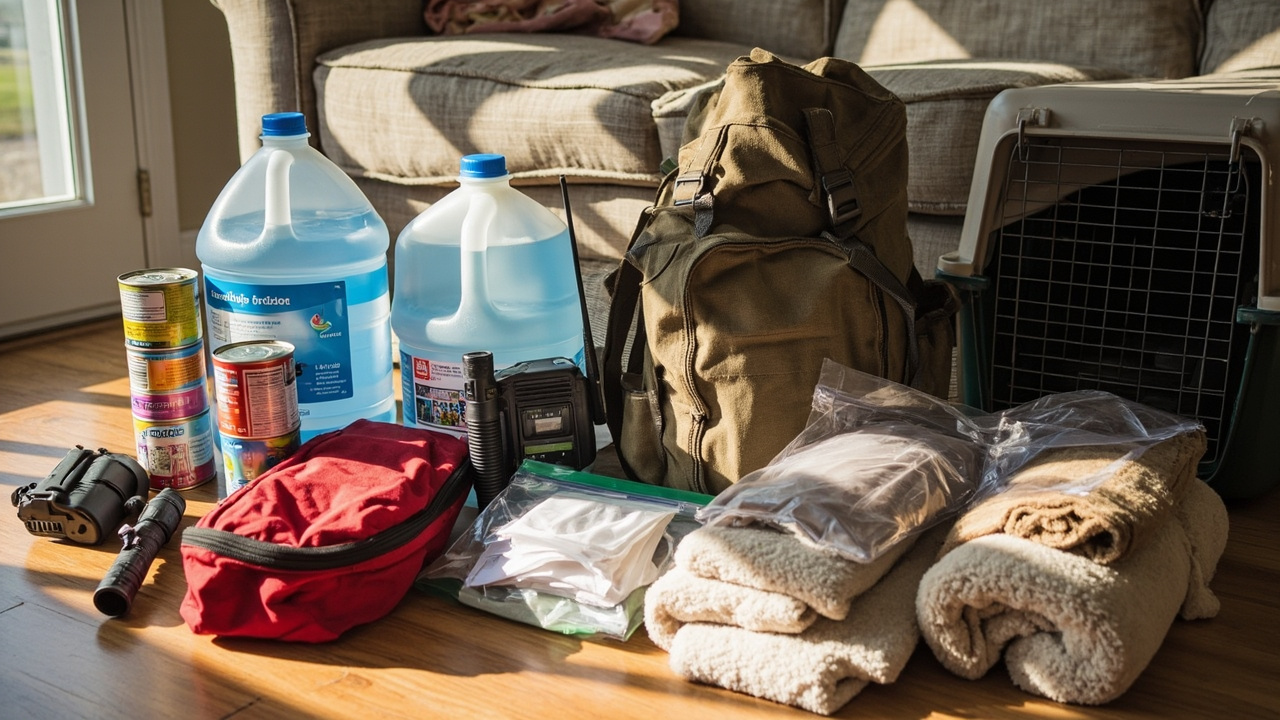
TL;DR: Build a home kit that lets your household leave fast or shelter for at least three days, following Bulletin 1428-1 revised September 24, 2026.
Revised Guidance Puts Evacuation First
The newest verified update is Bulletin 1428-1, listed as published with minor revisions on September 24, 2026, by University of Georgia Cooperative Extension authors Ashlee Tziganuk and Jermaine Durham, according to the CAES Field Report titled Building a Home Emergency Kit.
The core message is direct: being prepared can make evacuation quicker and less stressful, and building a home emergency kit ahead of time helps ensure essential supplies are readily available if you need to leave your home.
The same report organizes supplies by priority, from essential supplies needed by every household to additional items based on family circumstances, and notes most emergency kits can be built gradually over time as supplies are gathered and updated. For a more comprehensive list, it points readers to the Home Emergency Management Guide and the Extension Emergency Resources website.
That timing matters for families. The City of Asheville, in its September 24, 2026 notice titled September is Emergency Preparedness Month: Build a kit, reports that September each year brings a reminder from the Federal Emergency Management Agency to prepare to face an emergency and protect homes, family, loved ones and neighbors. That campaign has run since 2004, and this year's theme is "Stand Ready."
Start With Food And Water For Three Days
How Much To Store
Start by collecting the basic supplies recommended for all households, beginning with food and water.
According to the CAES Field Report, choose nonperishable, easy to prepare, healthy foods, and at a minimum have a 3-day supply. For water, the recommendation is 1 gallon per person per day, and at a minimum have a 3-day supply.
The City of Asheville guidance uses the same baseline in different words: water at one gallon per person per day for several days, for drinking and sanitation, plus at least a several-day supply of non-perishable food. Its notice adds the planning phrase widely used by preparedness offices: "The first 72 is on you."
That phrase means emergency or utility services may not be able to reach you or your area immediately. Asheville advises stocking enough supplies to last you, your family, and your pets for the first 72 hours.
USPS Employee News, in its September 21, 2026 article titled Here's how to create an emergency supply kit, frames the same goal for National Preparedness Month in September: having your own food, water and other supplies to last for several days. It lists one gallon of water per person per day for several days, alongside nonperishable, easy-to-prepare food and a manual can opener.
Mom move: Do not buy a full pantry at once. The CAES Field Report specifically says kits can be built gradually, so add one case of water and a few extra cans or pouches during routine shopping.
Safety, Power And Communication Gear
Lights, Radio And Phone
The CAES Field Report groups the next priority as safety and communication, plus basic tools.
It recommends a flashlight and extra batteries. It recommends both a battery-powered or hand-crank radio AND a National Oceanic and Atmospheric Administration weather radio with an audible alert. It also recommends a cell phone with charger and backup battery or emergency charging device.
Asheville lists a battery-powered or hand crank radio and a NOAA Weather Radio with tone alert, plus flashlight, extra batteries, and a cell phone with chargers and a backup battery. USPS Employee News lists a battery-powered or hand-crank radio, flashlight and extra batteries, and a cellphone with charger and a backup battery.
For tools, the CAES Field Report lists a multipurpose tool, manual can opener, and wrench or pliers to turn off utilities, plus a whistle to signal for help. Asheville separately lists a manual can opener for food, a wrench or pliers to turn off utilities, a whistle to signal for help, and work gloves.
Health And First Aid
For health, the CAES Field Report recommends a first aid kit, plus medications in a 7-day supply and required medical devices.
Asheville expands the medicine category with prescription medications, over-the-counter drugs, and vitamins, plus non-prescription medications such as pain relievers, anti-diarrhea medication, antacids or laxatives. It also lists prescription eyeglasses and contact lens solution, and soap, hand sanitizer and disinfecting wipes to disinfect surfaces.
USPS Employee News lists first-aid supplies, medications and any needed medical items, plus soap, hand sanitizer and disinfecting wipes.
Protect Documents And Cash
Waterproof And Digital Copies
Store copies of important records in a waterproof container, and consider keeping digital copies in a secure online location in addition to paper copies, according to the CAES Field Report.
That report lists medication list and relevant medical information, proof of address, lease or deed to home, passports and birth certificates, insurance policies for home, auto, health and related coverage, family and emergency contact information, extra cash, and printed maps of the area.
USPS Employee News gives a matching document step: consider adding copies of personal documents such as medication lists and pertinent medical information, proof of address, deed or home lease, passports, birth certificates and insurance policies. It adds a packing method: store these items in airtight plastic bags and put the entire disaster supplies kit in one or two easy-to-carry containers such as plastic bins or a duffel bag.
Asheville likewise advises keeping important family documents such as copies of insurance policies, identification and bank account records saved electronically or in a waterproof, portable container. It also lists cash or traveler's checks, while the CAES Field Report lists extra cash.
Mom move: Put one waterproof pouch together first, then photograph or scan the same pages to a secure online location. Keep printed area maps inside because a phone may not load maps during an outage.
Fit The Kit To Kids, Seniors And Pets
Infants And Young Children
Not every household needs the same supplies, so add items that fit your family's circumstances.
For infants and young children, the CAES Field Report lists bottles, formula and baby food, diapers, comfort items, and games and activities for children.
Asheville lists infant formula, bottles, diapers, wipes and diaper rash cream, plus books, games, puzzles or other activities for children. The overlap is intentional: feeding, diapering, comfort, and something calm to do.
Older Adults And Disability Needs
For older adults and individuals with disabilities, the CAES Field Report lists extra medical supplies, backup batteries for medical equipment, mobility aids such as wheelchairs and walkers, and items such as glasses, contact lenses, hearing aids and related aids.
Asheville closes its checklist with the same principle in broader terms: make sure supplies fit your family's needs, such as supplies for pets or seniors. That includes prescription eyeglasses and contact lens solution in its basic list.
Pets
For pets, the CAES Field Report lists food and water at 1/2 to 1 gallon of water per pet per day, plus leash or carrier, identification tags, vaccination records, and medications.
Asheville lists pet food and extra water for your pet, and urges households to include pets in the first 72-hour supply plan. USPS Employee News also places pet planning in the broader household kit, while First In Restoration style hurricane checklists commonly repeat the same categories, but the CAES pet-water amount is the specific figure to use here.
Add Comfort For Longer Emergencies
Hygiene, Clothing And Shelter
These items can improve comfort and safety during a prolonged emergency.
For personal hygiene, the CAES Field Report lists toilet paper, moist towelettes or disinfecting wipes, garbage bags, soap, hand sanitizer, and masks for everyone ages 2 and above. Asheville lists moist towelettes, garbage bags and plastic ties for personal sanitation, plus personal hygiene items. USPS Employee News lists moist towelettes, garbage bags and plastic ties.
For clothing and shelter, the CAES Field Report lists extra clothing, hat, sturdy shoes, and work gloves, plus rain gear such as waterproof poncho or umbrella, towels, and blankets or sleeping bags. Asheville lists a sleeping bag or warm blanket for each person, a complete change of clothing appropriate for climate and sturdy shoes, work gloves, a dust mask to help filter contaminated air, and personal hygiene items.
Household Supplies
For household supplies, the CAES Field Report lists matches in a waterproof container, plastic sheeting, duct tape, and scissors, tools and supplies to secure your house, household liquid bleach described as unscented, mess kits, paper cups, plates, paper towels and disposable utensils, and paper and pencil.
Asheville lists plastic sheeting, scissors and duct tape to shelter in place, matches in a waterproof container, a fire extinguisher, mess kits, paper cups, plates, paper towels and plastic utensils, and paper and pencil. It also lists local maps, while the CAES report lists printed maps of the area.
Build A Smaller Kit For Your Vehicle
If You Are Stranded Or Must Leave Fast
A smaller emergency kit in your vehicle can be helpful if you become stranded or need to evacuate quickly, according to the CAES Field Report.
That vehicle list includes water, canned food and energy bars, first aid kit, flashlight with extra batteries, safety light sticks, blankets or sleeping bags, jumper cables, trash bags, pencil, pen, and paper, a metal whistle with a lanyard or string to hang around the neck, a list of emergency contacts with phone numbers, a weather alert radio, an emergency phone charger, and extra cash and change.
Keep the car kit lean and separate from the home kit. Water, food bars, light, warmth, charger, contacts, and cash cover the most likely roadside problem: waiting safely until help or family can reach you.
Keep It Ready And Where Everyone Can Find It
Store the home kit in a cool, dry location. Replace expired items as needed. Update the kit annually and as personal needs change. Keep it in a designated place in the home and make sure all household members know where it is stored. Those four maintenance steps come directly from the CAES Field Report.
USPS Employee News adds the same access rule: everyone in the household should know the location of and be able to access the emergency kit in the event of a disaster.
The reference cited in the CAES Field Report is Federal Emergency Management Agency guidance from 2026 titled Build a kit, available through the U.S. Department of Homeland Security at ready.gov/kit. The original manuscript was prepared by Candace Tucker and Pamela R. Turner, and revised in 2026 by Ashlee Tziganuk.
For National Preparedness Month, start with three days of food and water, working light and alerts, a waterproof document pouch, and supplies matched to children, medical needs, and pets. Then maintain the kit once a year and after any household change.
Sources referenced
- Building a Home Emergency Kit | CAES Field Report (https://fieldreport.caes.uga.edu/publications/B1428-1/build-a-home-emergency-kit/)
- September is Emergency Preparedness Month: Build a kit - The City of Asheville (https://www.ashevillenc.gov/news/september-is-emergency-preparedness-month-build-a-kit/)