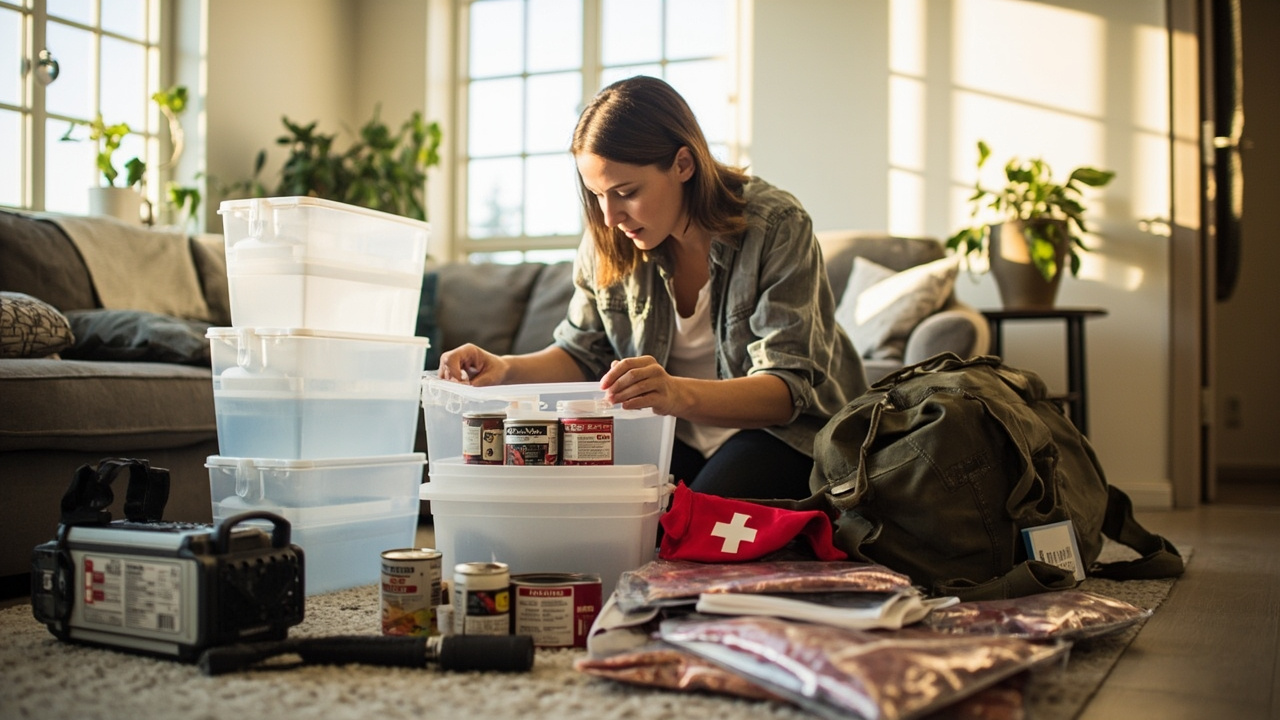
TL;DR: Build one or two easy-to-carry containers with several days of water and nonperishable food, light and power, health supplies, sanitation gear, documents in airtight bags, and tools for signaling, shelter and utilities, and make sure every household member knows where the kit is and can reach it.
Why Sept. 21 put kits back on the table
On Sept. 21 at 5:06 a.m. ET, USPS Employee News published “Here’s how to create an emergency supply kit” to mark National Preparedness Month in September, according to USPS Employee News.
In that report, the Postal Service is encouraging employees to prepare or refresh their home disaster kit.
The report defines a household disaster supplies kit as a collection of basic items a family may need in an emergency, and it describes being prepared as having food, water and other supplies to last for several days, according to USPS Employee News.
The same report states that everyone in the household should know the location of the emergency kit and be able to access it in a disaster.
Start with water for drinking and sanitation
Provide one gallon of water per person per day for several days, according to USPS Employee News.
The City of Detroit’s Sept. 15 guidance for National Preparedness Month uses the same measure and adds that the water covers drinking and sanitation, according to the City of Detroit.
Detroit’s Office of Emergency Management & Homeland Security encourages residents to prepare an emergency supplies kit in the home, according to the City of Detroit.
In Cattaraugus County’s Sept. 17 preparedness guidance, the water recommendation is at least one gallon per person and pet, per day, with water purification supplies and directions, and the county advises keeping additional water when food needs water for preparation such as noodle soups, oatmeal or dehydrated meals.
For moms building for a full household, that means counting each person and each pet, then multiplying by the number of days the household wants to cover.
Store water and other items in airtight plastic bags where appropriate, then place the supplies in portable containers, according to USPS Employee News and the City of Detroit.
Food, opener, and kitchen readiness
Stock nonperishable, easy-to-prepare food plus a manual can opener, according to USPS Employee News.
The City of Detroit recommends at least a several-day supply of non-perishable food, according to the City of Detroit.
FEMA’s guidance, as reported Sept. 15 by Taylorville Daily News writer Dylan Clark, also calls for enough water and non-perishable food to last for several days.
Cattaraugus County advises choosing shelf-stable food the family likes with varied nutrients, listing fruits, vegetables, proteins and healthy carbohydrates as idea-starters.
Keep a manual can opener for food, because pull-tab packaging is not universal, according to the City of Detroit, USPS Employee News and reporting on FEMA guidance in Taylorville Daily News.
Cattaraugus County also notes that preparation water matters: if meals require water, store extra water for that purpose.
Light, power, and information
Pack a battery-powered or hand-crank radio, a flashlight and extra batteries, according to USPS Employee News.
Detroit’s list specifies a battery-powered or hand crank radio and a NOAA Weather Radio with tone alert, plus a flashlight and extra batteries, according to the City of Detroit.
Reporting on FEMA guidance likewise lists a flashlight, extra batteries and a battery-powered or hand-crank radio capable of receiving National Oceanic and Atmospheric Administration Weather Radio alerts, according to Taylorville Daily News.
Cattaraugus County lists a battery-powered or hand-cranked emergency radio, flashlights, lanterns, batteries for emergency devices, plus charging cables and battery power supply for cell phones.
Add a cellphone with charger and a backup battery, according to USPS Employee News.
Detroit and FEMA guidance also include a cell phone with chargers and a backup battery, or an extra cell phone battery or charger, according to the City of Detroit and Taylorville Daily News.
The Postal Service points employees to its Personal Preparedness Blue page and to Ready.gov for more information, according to USPS Employee News.
First aid, medications, and personal needs
Include first-aid supplies, medications and any needed medical items, according to USPS Employee News.
Detroit lists a first aid kit among basic items, according to the City of Detroit.
FEMA guidance lists a first aid kit and advises considering individual needs in the household, with additional supplies that may include prescription medications, glasses, infant formula and diapers, pet food and supplies, cash, important family documents and personal hygiene products, according to Taylorville Daily News.
Cattaraugus County suggests extra prescription medications when possible, printed photos of prescription labels, an extra pair of prescription eyeglasses or contacts and solution, and supplies for special needs or special medical needs such as headphones, ear plugs, specialized dietary foods, hearing aid batteries, and emergency medical devices such as hand pumps or auxiliary batteries.
For babies, Cattaraugus County lists formula, diapers, wipes, diaper creams and medications when needed.
For pets and service animals, the county lists food, additional water, medications, first aid supplies, copies of vaccination records, spare collar or harness and leash, and waste clean-up bags when needed.
Detroit also directs residents to Ready.gov or detroitmi.gov/EMHS and to search emergency preparedness for additional recommended supplies, according to the City of Detroit.
Hygiene and sanitation supplies
Pack soap, hand sanitizer and disinfecting wipes, according to USPS Employee News.
Also pack moist towelettes, garbage bags and plastic ties, according to USPS Employee News.
Detroit lists moist towelettes, garbage bags and plastic ties for personal sanitation, according to the City of Detroit.
FEMA guidance includes sanitation supplies, dust masks and personal hygiene products among kit contents or add-ons, according to Taylorville Daily News.
Cattaraugus County lists hand sanitizer, toiletries including toothbrushes, toothpaste, soap, deodorant, sunscreen, bug spray and feminine hygiene products, plus toilet paper, wipes and emergency toilet supplies.
Keeping these items sealed helps protect them from moisture and spills during storage and transport.
Papers to copy, seal, and store with the kit
Consider adding copies of personal documents such as medication lists and pertinent medical information, proof of address, deed or home lease, passports, birth certificates and insurance policies, according to USPS Employee News.
FEMA guidance also points to important family documents and cash as household-specific additions, according to Taylorville Daily News.
Cattaraugus County lists printed copies of insurance documents, identification including license, birth certificates and passports, emergency contacts including personal contacts, insurance companies, medical offices and utility companies, plus printed communication cards for use with first responders who might not know sign language or non-verbal persons.
Store these items in airtight plastic bags, according to USPS Employee News.
Detroit gives the same packing method: store items in airtight plastic bags, according to the City of Detroit.
How to pack so the kit can move
Put the entire disaster supplies kit in one or two easy-to-carry containers such as plastic bins or a duffel bag, according to USPS Employee News.
Detroit uses the same container guidance: one or two easy-to-carry containers such as plastic bins or a duffel bag, according to the City of Detroit.
Cattaraugus County describes a waterproof tote or container to store supplies that is easily accessible in case of emergency.
The county also suggests keeping go-kit items in a backpack inside the emergency kit tote so the bag can be grabbed when leaving the house, while recognizing that other items such as multiple gallons of water would not be so portable.
Everyone in the household should know where the kit is kept, according to USPS Employee News.
Tools that support signaling, shelter, and utilities
Detroit’s basic list adds a whistle to signal for help, a dust mask to help filter contaminated air, plastic sheeting, scissors and duct tape to shelter in place, a wrench or pliers to turn off utilities, and local maps, according to the City of Detroit.
FEMA guidance reported in Taylorville Daily News also includes a whistle to signal for help, dust masks, tools that can be used to shut off utilities, local maps and a manual can opener.
Cattaraugus County lists an emergency whistle to signal for help, printed local maps and emergency routes as needed, cash, paper, pens, pencils and sharpener, and matches in a waterproof container kept safely away from children.
FEMA guidance also recommends keeping warm blankets or sleeping bags, changes of clothing, matches in a waterproof container, a fire extinguisher and activities for children, according to Taylorville Daily News.
Smaller emergency kits can also be kept in vehicles and workplaces, according to Taylorville Daily News.
Keep the kit current and connected
Families are encouraged to periodically check emergency supplies and replace expired food, medications, batteries or other items when necessary, according to Taylorville Daily News.
Start with what is already available at home, add items over time, and check the kit regularly to replace expired supplies, with a complete emergency supply list at Ready.gov/kit, according to a Sept. 21 City of San Jacinto preparedness post.
Detroit notes other preparedness steps: sign up to receive Detroit Alerts 365, the City of Detroit emergency notification system, and consider taking Community Emergency Response Team training, according to the City of Detroit.
To register for Detroit Alerts 365 notifications by text, phone or email, or to register for quarterly CERT training classes, Detroit directs residents to visit detroitmi.gov and search Detroit Alerts 365 or CERT, according to the City of Detroit.
The USPS report also lists the USPS National Employee Emergency Hotline as 888-363-7462, according to USPS Employee News.
Sources referenced
- Here’s how to create an emergency supply kit – USPS Employee News (https://news.usps.com/2026/09/21/heres-how-to-create-an-emergency-supply-kit/)
- During National Preparedness Month, prepare an Emergency Supplies Kit | City of Detroit (https://detroitmi.gov/news/during-national-preparedness-month-prepare-emergency-supplies-kit)