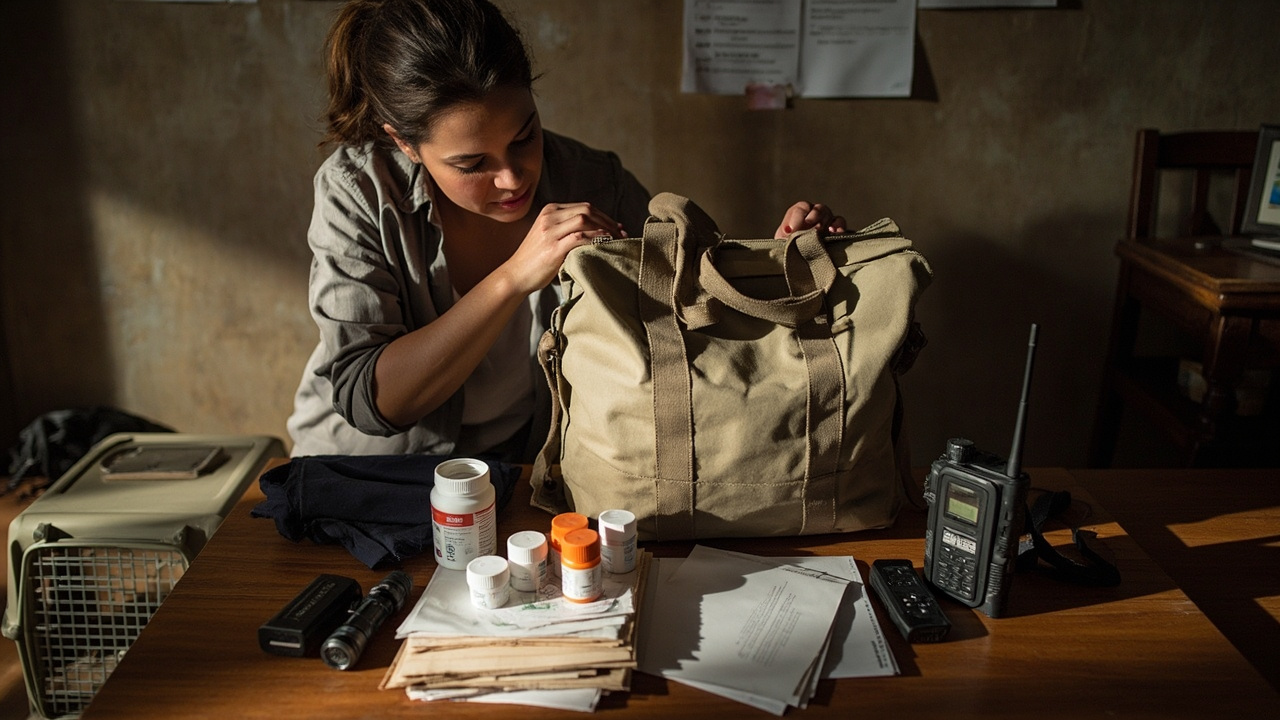
TL;DR: A complete household plan pairs food, water and flashlights with insurance review, power backup, contacts, documents, medications, cash, pets and evacuation routes.
A Sept. 12, 2026 report by Alison Green for KIRO 7 News Seattle states that strong readiness includes insurance, evacuation plans, emergency contacts, medications, important documents, backup power, pet arrangements and property protection alongside food, water and flashlights.
That broader checklist arrived during National Preparedness Month, which the Federal Emergency Management Agency marked in 2026 with the theme "Americans Stand Ready," according to Utah State University Extension reporting published Sept. 11, 2026.
Why basics alone fall short
Food, water, batteries and flashlights cover only part of household need, according to KIRO 7 News Seattle. The report asks households to consider disruption beyond a brief outage and to account for health, shelter, money, records and communication.
A 2025 Lebanon County disaster preparedness campaign citing FEMA's 2024 National Household Survey reported that 83% of respondents had taken at least three preparedness actions, up from 57% the year before, according to KIRO 7 News Seattle.
Utah State University Extension noted that state communities during 2026 had faced wildfires, flash floods, damaging hailstorms, extended power outages and evacuations affecting families, first responders, farmers and ranchers. The Extension summary states that emergencies can happen anywhere, often with little warning.
FEMA recommends that households plan, stay informed about local hazards, and build emergency supply kits with water, food, medications and important documents, according to Utah State University Extension.
Start with local hazards
Risks vary by location, with many households facing severe weather combined with extended outages, according to KIRO 7 News Seattle. The report lists hurricanes and tropical storms, flooding and storm surge, tornadoes and severe thunderstorms, wildfires, earthquakes, winter storms and extreme cold, heat waves and long power outages.
Knowing which hazards are most likely in an area helps shape a practical plan, according to KIRO 7 News Seattle.
Utah State University Extension similarly advises households to identify likely hazards and understand local instructions before assembling support for interrupted services.
The Oklahoma Insurance Department, in a Sept. 10, 2026 release, urges residents to stay informed by enabling emergency alerts on phones and monitoring weather updates through radio, television or smartphone apps.
Review insurance before storm season
A standard homeowners policy does not cover every disaster type, and flooding, wind damage, earthquakes and temporary living expenses are handled differently by policy and location, according to KIRO 7 News Seattle.
The report advises review of dwelling and personal property limits, wind or hurricane deductibles, flood exclusions, additional living expense coverage, detached structure coverage, replacement cost terms and requirements for documenting losses.
Homeowners in higher-risk areas should consider whether to seek expert insurance advice ahead of storm season or another major hazard, according to KIRO 7 News Seattle.
Knowing coverage in advance makes gaps easier to identify while time remains to address them, according to KIRO 7 News Seattle.
Plan for hours or days without power
A disaster may leave a household without electricity for hours or days, according to KIRO 7 News Seattle. The report advises keeping power banks charged, flashlights ready and a battery-operated or hand-crank radio available for emergency information when internet service is unreliable.
Households should identify electricity-dependent essentials, listed in the report as refrigerators and freezers, medical devices, phones and tablets, well pumps, garage doors and heating or cooling equipment.
A generator or portable power station can support critical needs, but households should understand limits in advance, according to KIRO 7 News Seattle. The report advises safe fuel storage where fuel is required, periodic testing of backup equipment and advance priority choices for appliances and devices when power is limited.
Build a communication and reunion plan
Family members may be at work, school or elsewhere when an emergency begins, according to KIRO 7 News Seattle. The report advises an out-of-area contact who can relay messages, an agreed meeting place and clear call instructions for children.
Important numbers should be written down as well as stored on phones, according to KIRO 7 News Seattle.
Utah State University Extension advises families to determine how members will contact one another, where they will meet if separated and how they will receive emergency alerts.
The Oklahoma Insurance Department advises listing emergency contacts, key service providers and at least one out-of-state contact, with copies for each household member. The department also advises households to decide where they will meet.
Protect documents for faster recovery
Replacing identification, insurance records, medical information and financial documents after a disaster adds stress, according to KIRO 7 News Seattle. Records should be secure yet accessible for rapid departure.
The report advises keeping copies of identification documents, insurance policies, medical and prescription information, property records, emergency contact details, bank and account information and home inventory photos.
Physical copies belong in a fire- and water-resistant container, with encrypted digital backups in a secure cloud account or external drive, according to KIRO 7 News Seattle.
The Oklahoma Insurance Department advises packing important documents in a go-bag alongside nonperishable food, water, medications and a change of clothes.
Cover medications and medical equipment
Disasters become harder when someone depends on medication, mobility equipment, regular treatment or daily assistance, according to KIRO 7 News Seattle. The report advises current prescriptions, a written medication list and planning for equipment needing electricity or refrigeration.
Utah State University Extension advises an updated medication list, adequate prescription supplies when possible and secure storage of medical information copies. Families should consider keeping an updated medication list and, when possible, at least a one-week supply of essential prescription medications, according to that Extension summary.
People who rely on medical equipment, specialty supplies or routine treatments should include those needs in emergency plans, according to Utah State University Extension.
The Oklahoma Insurance Department also advises households to address unique needs by including medical equipment, medications, pet supplies or other household-specific items.
Include pets and others needing extra help
Pet and vulnerable-relative arrangements need advance work, according to KIRO 7 News Seattle. Households should identify which shelters, hotels or relatives can accommodate them and prepare carriers, mobility aids, medical supplies, identification and other evacuation essentials ahead of time.
FEMA recommends including pets and individuals with specific medical or mobility needs in planning, according to Utah State University Extension.
The Oklahoma Insurance Department advises including pet supplies among household-specific kit contents.
Keep cash and backup payment methods
Power and network disruptions may leave card readers, ATMs and mobile payment systems unavailable, according to KIRO 7 News Seattle.
The report advises access to cash in small bills, a backup credit or debit card, fuel money, emergency account details, copies of key banking contacts and more than one payment method.
Cash and backup cards should be stored securely, with another trusted adult in the household aware of the location, according to KIRO 7 News Seattle.
Map evacuation, shelter and water needs
An evacuation and shelter plan should include multiple exit routes and safe locations, according to the Oklahoma Insurance Department. That department advises households to know routes, identify nearby shelters or trusted places to stay and choose a meeting location.
The Oklahoma Insurance Department also advises building a go-bag and practicing the plan through drills with regular updates.
A common recommendation cited by KIRO 7 News Seattle is at least one gallon of water per person per day for several days. Households should also account for pets, medical needs, hot weather and possible longer service disruptions, according to that report.
Review yearly and after household changes
Plans should be reviewed at least once a year and whenever household circumstances change, according to KIRO 7 News Seattle. A move, new medication, different school, new pet or insurance change may require updates to parts of the disaster plan.
The Oklahoma Insurance Department advises holding drills and updating plans regularly to keep them current.
Utah State University Extension suggests small readiness actions: checking emergency supplies, storing extra water, reviewing family communication plans and scheduling a preventive healthcare appointment.
Sources referenced
- Disaster preparedness should cover more than food, water and flashlights - KIRO 7 News Seattle (https://www.kiro7.com/contributor/disaster/WM3OAO6LWA6P3KYUFEGTXMIV6Q/)
- Ask an Expert: September Is National Preparedness Month: "Americans Stand Ready" | USU (https://extension.usu.edu/news/ask-an-expert-september-is-national-preparedness-month-americans-stand-ready)