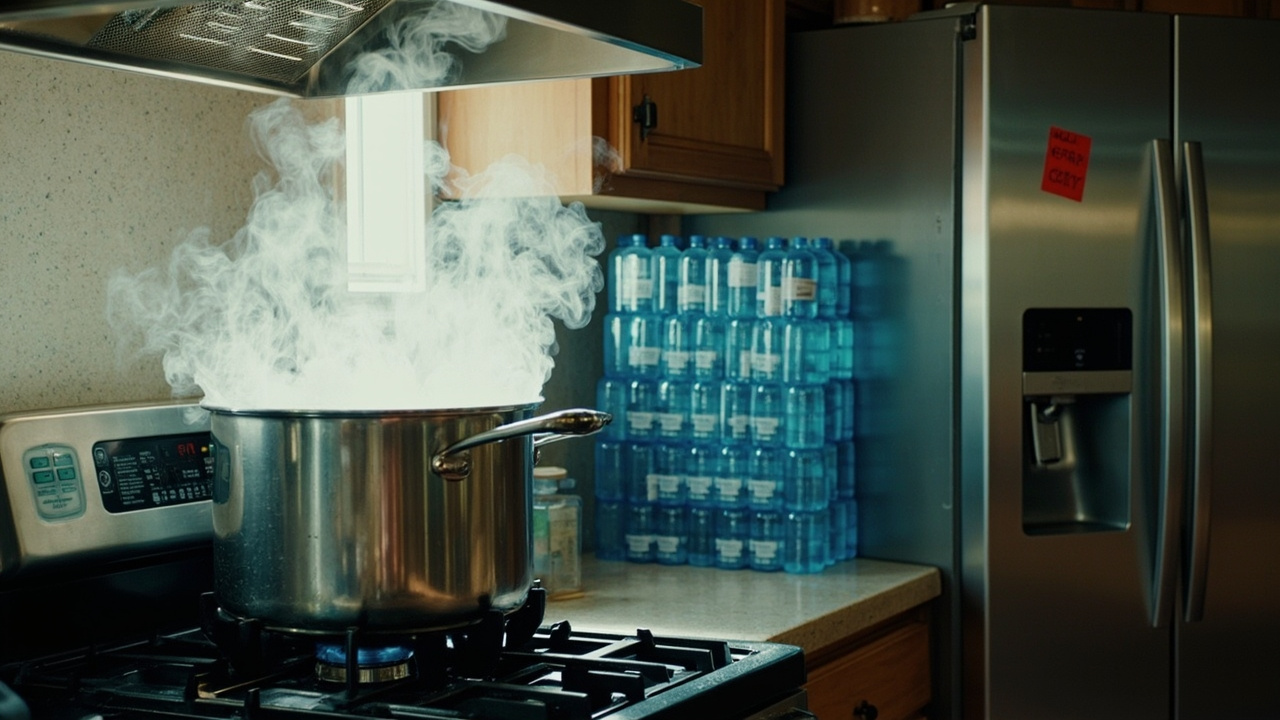
TL;DR: A boil-water notice means germs that heat kills — boil it or use bottled water. A do-not-drink notice means chemicals or toxins that heat cannot fix — do not boil, use bottled water for anything you swallow.
Federal guidance recognizes three drinking-water advisories, and the action depends on whether the threat is biological or chemical, according to the Better Society guide published September 18, 2026. A boil-water advisory covers bacteria, viruses, or parasites that heat destroys. A do-not-drink advisory covers chemical contamination where heat is useless. A do-not-use advisory is the rarest and strictest, covering contamination where even skin contact or breathing shower steam carries risk.
That distinction was front and center during National Preparedness Month in September 2026. On September 18, 2026, the U.S. Environmental Protection Agency Region 7 held a demonstration of its Water-on-Wheels Mobile Emergency Water Treatment System at Clinton State Park in Lawrence, Kansas, with federal partners, local public health leaders, and water-focused non-profits, according to the EPA news release titled Beyond Bottled Water: EPA Showcases Technology That Provides Safe Drinking Water to Disaster-Hit Areas.
The three advisories are not levels of the same warning
A boil-water advisory, also called a boil-water notice, warning, or order, tells consumers to boil tap water before using it because drinking water is, or could be, contaminated by pathogens, according to Edgepedia's Boil-water advisory overview published September 17, 2026.
The three types map to what boiling can and cannot fix:
- Boil-water advisory: Boil tap water before use, because boiling kills the germs that could make people sick. Commercially bottled water is also accepted.
- Do-not-drink advisory: Issued when tap water is or could be contaminated with harmful chemicals or toxins. Boiling such water will not make it safe.
- Do-not-use advisory: Requires commercially bottled water for all purposes because any contact with skin, lungs, or eyes could be dangerous.
The Better Society guide warns against treating do-not-drink and do-not-use as stricter versions of boil. Boiling during a chemical event is not merely useless, it is counterproductive, because evaporation leaves the same amount of contaminant in less water. Edgepedia states the same limit in technical terms: boiling kills germs but does not remove chemicals or radionuclides and can concentrate non-volatile contaminants such as metals and nitrates.
A boil notice is precautionary, not proof of illness
A boil-water advisory is a precautionary instrument, not a confirmation of contamination, according to Edgepedia. Louisiana's health department states the principle directly: an advisory is issued when an event has occurred that allows the potential for biological contamination; it does not mean the water is contaminated, only that it may be.
Common operational triggers listed in New York consumer guidance include loss of pressure in the distribution system, loss of disinfection, water line breaks, treatment disruptions, power outages, and floods. Loss of pressure matters because pathogens may be able to enter the piped system when it depressurizes.
In Canada from 2010 to 2012, 46.1% of boil-water advisories followed distribution-system problems, according to Edgepedia. In the United States, 153,530 public water systems supply drinking water daily. Typical advisory duration is 24 to 48 hours, sometimes several days or more.
Toledo 2014: when officials said do not boil
On August 1, 2014, routine sampling at the Collins Park treatment plant in Toledo, Ohio, found microcystin, a toxin produced by cyanobacteria blooming in Lake Erie, at 3.19 micrograms per liter in finished drinking water, according to the Better Society guide. The state advisory threshold was 1.0.
The order that went out early on August 2 reached roughly 400,000 people, and it told them not to drink the water and not to boil it either. That second instruction mattered because a household that reached for the stock pot out of habit would have concentrated the toxin rather than removing it. The order held until the evening of August 4, when repeated sampling put the readings back under the threshold.
Toledo shows why the first check is not the word boil. It is whether the notice names a germ or a chemical. Massachusetts also uses a Do Not Drink Order for contamination for which boiling may not be enough treatment, according to Edgepedia.
How to boil when boiling is the order
When the notice is genuinely a boil notice, bring clear water to a full rolling boil and hold it there for one minute, according to the Better Society guide and Edgepedia. Above 6,500 feet of elevation, where water boils at a lower temperature, hold it for three minutes, following CDC guidance cited by both publications.
Edgepedia defines a full rolling boil as a vigorous boil where bubbles appear at the center and do not disappear when the water is stirred. Holding water at a rolling boil for one minute inactivates waterborne bacteria, protozoa, and viruses. Health Canada gives a related high-elevation rule of at least two minutes above 2,000 meters, approximately 6,560 feet.
If the water is cloudy, let it settle or run it through a clean cloth first, then boil, according to the Better Society guide. Cool it in covered containers. New York guidance adds that water may take about 30 minutes to cool, so plan ahead. Commercially bottled water is an equally valid answer at every step. The twenty-minute boil is folklore, and in a widespread outage it burns fuel a household may need for other things.
Kitchen habits that bypass the boil
Most exposure during a boil notice happens through routes households do not think of as drinking, according to the Better Society guide:
- Refrigerator ice makers and door dispensers draw from the same line and do not disinfect.
- Brushing teeth counts as drinking; use boiled or bottled water at the sink.
- Dishwashers are fine if they run a sanitize cycle or a 150-degree final rinse.
- Bathing is generally fine for adults who keep their mouths closed; sponge-bathe small children.
- Pets drink the same water people do, which means boiled or bottled.
- Ready-to-feed infant formula avoids the mixing question altogether.
- Carbon pitcher filters are built for taste, not for pathogens, and do not substitute for boiling.
CDC guidance cited in Edgepedia is explicit: boil tap water even if it has passed through a home water filter or a filter pitcher. A September 2026 home-filter guide similarly states that CDC advises using commercially bottled water or boiling tap water during a boil-water advisory, even when that water has passed through a home filter.
Health Canada identifies scalding risk, especially to children and the elderly, turning to unsafe alternative water sources, and significant economic impacts on local businesses as possible negative consequences of advisories, according to Edgepedia.
Milwaukee 1993: why fast response matters
In the spring of 1993, inadequate filtration at one of Milwaukee's two treatment plants let Cryptosporidium oocysts through into the distribution system, according to the Better Society guide. An estimated 403,000 people fell ill, still the largest documented waterborne outbreak in United States history.
A later accounting in a CDC journal put the cost at 96.2 million dollars in medical care and lost work. The parasite was not part of routine testing then, which is why recognition took so long.
The practical point is that a notice is a lagging indicator. Water quality is confirmed by sampling that takes time, so a gap between a problem starting and a message arriving is real. Canadian guidance distinguishes between advisories issued as a precaution and those issued in response to a waterborne disease outbreak, and states that emergency boil-water advisories should be issued in response to confirmed detection of E. coli in drinking water, according to Edgepedia.
How advisories end and how to store ahead
A utility must complete a defined sequence before an advisory can end. Edgepedia describes the lifting sequence as repair, flush, then two consecutive negative bacteriological sample sets taken at least 24 hours apart. The instructions that matter in an actual event are the ones a utility and local health department publish for that event, because they know which contaminant they are chasing, according to the Better Society guide.
For household planning, CDC emergency-water planning guidance recommends storing at least one gallon per person per day for three days and, if possible, a two-week supply, as summarized in September 2026 home-filter guidance citing CDC. Keep commercially bottled water in its original sealed containers.
Community backup was demonstrated September 18, 2026, at Clinton State Park. EPA Region 7 Administrator Jim Macy and FEMA Region 7 Administrator Jay Van Der Werff gave remarks on emergency response and federal partnership, according to the EPA news release. “The best emergency responses start with thoughtful preparation,” said Macy. “Today’s demonstration reinforces that resilient water infrastructure and strong state and local preparedness are essential before disaster strikes,” said Van Der Werff.
The WOW Cart on display is about the size of a shopping cart and can produce up to 10,000 gallons of treated water per day. WOW Carts can replace or supplement the need for bottled water following disasters. Since 2020, WOW Carts have been used in tornado, hurricane, and flood responses both nationally and internationally. The WOW Cart was developed through an EPA partnership with WaterStep. EPA Region 7, the Kansas Rural Water Association, and WaterStep staffed booths on water sampling and testing, WOW Cart technology, and technical assistance, and the EPA Region 7 Mobile Command Post and Mobile Drinking Water Lab were also on display.
Sources referenced
- The Difference Between a Boil Water Notice and a Do Not Drink Notice - Better Society (https://better-society.com/articles/the-difference-between-a-boil-water-notice-and-a-do-not-drink-notice)
- Boil-water advisory — Edgepedia (https://www.edgechat.ai/boil-water-advisory)