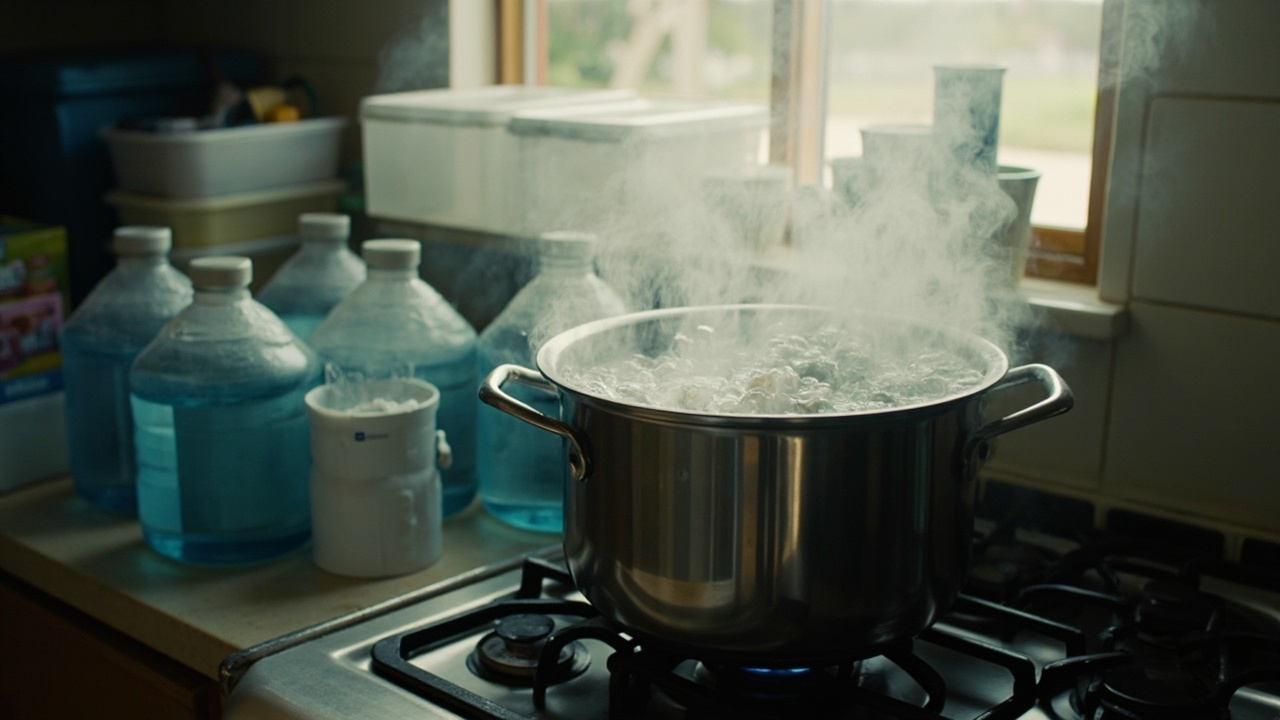
TL;DR: Keep boiling tap water in Escambia County until your own provider says it is safe, using a rolling boil for at least one minute for drinking, cooking, ice, teeth-brushing, and dishes.
On October 11, 2026, the Florida Department of Health in Escambia County, known as DOH-Escambia, urged residents in Pensacola, Fla., to keep following boil water notice precautions until they hear official word from their service provider that the water is safe for use, according to the Florida Department of Health in Escambia County publication titled “DOH-Escambia Urges Best Practices During Boil Water Notice.”
That October 11 guidance applies even when a household does not see its provider named on a public list. The Department stated that if you use a service provider that is not specifically listed, you should continue to follow all precautionary measures until receiving official confirmation that the water is safe for use.
The Department described a boil water notice as a public health advisory that instructs residents to boil their water before consuming it. The stated purpose is to help eliminate harmful bacteria, viruses, or parasites that may have entered the water supply during the storm.
An earlier companion notice from DOH-Escambia, published October 9, 2026, connected the precautions to impacts from Hurricane Isaias that have affected local water systems. That October 9 notice said several communities had issued boil water notices to ensure the safety of drinking water.
What DOH-Escambia asked residents to do
The central instruction from DOH-Escambia is to wait for notification. Residents should continue boiling water until the boil water notice has been lifted. The Department said local utilities and the Department will notify residents when it is safe to use tap water again.
The October 11 notice lists media contact information as [email protected]. For public information and updates, the Department directed residents to FloridaHealth.gov or to the State Assistance Information Line at 800-342-3557.
A report titled “DOH-Escambia Reminds Residents of Boil Water Precautions After Storm” summarized the same city and county advisory and pointed readers to a current list of active boil water notices by service provider at floridahealth.gov/environmental-health/drinking-water/boil-water-notices. That report also advised residents whose provider is not listed to keep taking precautions until they receive direct notification that the water is safe.
Why storm damage triggers a boil order
DOH-Escambia linked boil water precautions to possible contamination after storm impacts. The Department said boiling helps eliminate harmful bacteria, viruses, or parasites that may have entered the water supply during the storm.
The Emerald Coast Utilities Authority, or ECUA, described widespread service disruptions after Hurricane Isaias, including water outages and lift station issues throughout the service area, in an “ECUA Update #3” posted October 10, 2026, at 1:43 PM. That update is available at https://www.ecua.fl.gov/AlertCenter.aspx?AID=ECUA-Update-3-62.
In the same update, ECUA said crews were continuing to assess damage, address infrastructure issues and restore water and sewer services as quickly and safely as possible. It said power outages, blocked roadways, uprooted trees and other storm-related conditions were affecting access to some facilities and delaying restoration efforts in certain areas.
Systemwide notice from ECUA
ECUA said the Emerald Coast Utilities Authority had issued a systemwide precautionary boil water notice effective immediately following the impacts of Hurricane Isaias. The Authority instructed customers, until further notice, to bring tap water to a rolling boil for at least one minute before using it for drinking, cooking, making ice, brushing teeth, washing dishes or preparing food.
ECUA also instructed customers to allow the water to cool before use. It said water that has not been boiled or replaced with bottled water should not be used for drinking or other activities that could result in ingestion. Customers should follow the precautionary boil water notice until ECUA confirms that the water is safe for normal use.
The ECUA update thanked customers for patience and understanding as crews worked to assess storm impacts and restore water service where needed. It said customer and employee safety remain a priority as recovery efforts continue.
How much service was still down on October 10
In its October 10 update at 1:43 PM, ECUA reported that approximately 15% of ECUA’s water services remained offline as crews continued working to restore service throughout the system. That percentage describes the status reported at that afternoon update, not a later outcome.
The same update reported restored service to several critical facilities. ECUA said water service had been restored to the Escambia County Jail and Sheriff’s Office, as well as all three local hospitals: Baptist Hospital, Ascension Sacred Heart and HCA Florida West Hospital.
The update also said fire departments and the Pensacola Police Department had sufficient water pressure. ECUA described restoring and maintaining service to these critical facilities as an important milestone in its ongoing recovery efforts.
ECUA said it expected to provide an update that afternoon regarding its Water Quality Laboratory’s ability to collect and process water samples, as well as information on areas affected by precautionary boil water notices. For the latest information from ECUA, the Authority encouraged customers to visit ECUA.fl.gov and follow ECUA on social media.
Step 1: Boil for at least one minute
The first best practice listed by DOH-Escambia is to boil water. Residents should bring water to a rolling boil for at least one minute before using it for drinking, cooking, making ice, brushing teeth, or washing dishes.
ECUA used the same time and method in its systemwide notice. It directed customers to bring tap water to a rolling boil for at least one minute before drinking, cooking, making ice, brushing teeth, washing dishes or preparing food.
For households, the practical meaning is to treat all ingestion-related uses alike. Drinking, cooking, making ice, brushing teeth, washing dishes and preparing food were each named in one or both agency notices. Bottled water or water that has completed the stated boil should be used for those purposes while the notice remains active.
Step 2: Use bottled water when you have it
The second best practice listed by DOH-Escambia is to use bottled water. The Department said that if available, bottled water is a safe alternative during a boil water notice.
ECUA gave the same alternative in the October 10 update. It said water that has not been boiled or replaced with bottled water should not be used for drinking or other activities that could result in ingestion.
For preparedness planning, that makes stored bottled water directly useful during the waiting period. Households that already keep sealed bottled water can reserve fuel and stove time while still following the notice.
Step 3: Cool boiled water safely and store it clean
DOH-Escambia’s cooling guidance tells residents to allow boiled water to cool before using it or to refrigerate it in a clean container for later use. ECUA likewise told customers to allow the water to cool before use.
The emphasis on a clean container matters after a storm, when normal dishwashing and kitchen routines are disrupted. Using a clean container for cooled boiled water and refrigeration for later use follows the exact storage instruction published by DOH-Escambia.
Households should not use hot boiled water immediately for drinking or brushing teeth. The agencies both include a cooling step before use.
Step 4: Sanitize dishes and food-contact surfaces
DOH-Escambia included a separate practice for disinfecting surfaces. When washing dishes, the Department said to use boiled water or bottled water to sanitize them, especially items that come into contact with food.
That instruction goes beyond drinking water alone. Pots, plates, utensils, cutting boards, baby bottles and other food-contact items fall within the category the Department singled out for extra care.
ECUA’s notice also listed washing dishes among the uses that require a rolling boil for at least one minute. Taken together, the two agency statements direct households to avoid using untreated tap water for dishwashing while the notice is active.
Step 5: Protect pets the same way
DOH-Escambia told residents to be mindful of pets by boiling their water or providing bottled water for drinking. The October 11 notice and the October 9 notice both contain that pet instruction.
The related news summary titled “DOH-Escambia Reminds Residents of Boil Water Precautions After Storm” repeated the same point. It said other safety measures include providing boiled or bottled water to pets.
For pet owners, the preparation task is straightforward. Set aside part of the household’s boiled-and-cooled supply or bottled supply for pet bowls, rather than refilling bowls directly from the tap during the notice.
Step 6: Do not stop early because pressure looks normal
Both DOH-Escambia and ECUA warned against treating early signs of recovery as clearance. DOH-Escambia said to continue boiling until the notice has been lifted and to wait for notification from local utilities and the Department.
ECUA said customers should follow the precautionary boil water notice until ECUA confirms that the water is safe for normal use. It encouraged customers to monitor trusted local media outlets and emergency management resources for storm-related updates, including Escambia County Emergency Management and the National Weather Service office in Mobile.
That warning is important because limited restoration had already occurred by October 10. ECUA had restored service to the jail, sheriff’s office, three named hospitals, fire departments and the Pensacola Police Department, while approximately 15% of water services remained offline. Those restorations did not end the systemwide precautionary notice described in the same update.
Where to check status and get help
DOH-Escambia said it is working closely with local water utilities to monitor water quality and lift notices as soon as it is safe to do so. The Department emphasized public health and safety, especially during storms.
For updates, DOH-Escambia listed FloridaHealth.gov and the State Assistance Information Line at 800-342-3557 in its October 11 notice. The related October 11 summary listed the same helpline as 1-800-342-3557 and identified the statewide boil-water-notice list at floridahealth.gov/environmental-health/drinking-water/boil-water-notices.
ECUA listed its own contact points in “ECUA Update #3.” The Authority gave its address as 9255 Sturdevant Street, Pensacola, FL 32514, with phone 850-476-0480 Monday through Friday from 8:30am to 5pm and emergency after-hours phone 850-476-5110. It said ECUA was experiencing a temporary disruption to its phone service and asked customers reporting a water or sewer emergency to call 850-554-1689.
For preparedness, households should keep the provider name, the notice status, the helpline number and a method for boiling or a supply of bottled water together in one place. The October 11 DOH-Escambia message makes the end point clear: keep using boiled or bottled water for drinking, cooking, ice, teeth-brushing, dishes and pet drinking water until your service provider gives official confirmation that tap water is safe again.