TL;DR: Scotts Valley households should use early October to lock in winter and wildfire readiness — sign up for CruzAware alerts, learn your evacuation zone, and join the free October 14 Stay Ready workshop.
Scotts Valley, CA: Your Early-October Emergency Checklist for Storms and Wildfire
Scotts Valley families face a two-season overlap in early October: dry wildfire risk plus the start of winter-storm preparation. The newest verified guidance for Santa Cruz County residents came on October 3, 2026, when Wildfire alerts in California · Herebeat explained who issues evacuation orders and how to receive them, and on October 2, 2026, when the City of Santa Cruz Update: October 2, 2026 urged residents to prepare for El Niño-influenced winter weather before rain begins.
For Scotts Valley, that means the same county systems apply: CruzAware emergency alerts, numbered evacuation zones, and household supplies for flooding, storms, and power outages. A free county workshop on October 14 will walk through those exact topics.
Why winter preparation is starting now
City crews are already working throughout Santa Cruz to reduce risks and prepare infrastructure for rain, wind, flooding and coastal conditions, according to the City of Santa Cruz Update: October 2, 2026.
That work includes clearing storm drains and inlets and maintaining creeks, levees, culverts and vegetation, while emergency response teams prepare equipment and coordinate with regional partners.
The same update flags El Niño as a factor in the winter ahead. El Niño can influence winter weather and contribute to higher sea levels and larger swells, but it does not tell officials when storms will arrive, how strong they will be or how much rain Santa Cruz will receive.
Mayor Fred Keeley addressed winter readiness in his latest Mayor's Message, which the October 2 bulletin links for residents seeking more detail on city preparations.
For Scotts Valley homes tucked between the Santa Cruz Mountains and the San Lorenzo Valley corridor, the takeaway is timing: drainage and supply checks belong in early October, not after the first flood watch.
Free October 14 Stay Ready workshop covers county specifics
The Housing Authority of the County of Santa Cruz and the Santa Cruz County Office of Response, Recovery, & Resilience (OR3) will hold a Stay Ready emergency preparedness workshop on Wednesday, October 14, 2026 at 5:00 PM online via Zoom, according to Stay Ready: Emergency Preparedness Workshop | Housing Authority of the County of Santa Cruz.
The listing, posted September 29, 2026, says the session will cover El Niño and severe weather, flooding, storms, and power outages, emergency alerts and evacuation information, preparing a household before an emergency, and local resources available in Santa Cruz County.
Live Spanish interpretation will be available, and registration is offered through the Housing Authority page.
A companion notice on the Housing Authority news page points residents to hacosantacruz.org/stayready for local emergency resources, severe weather information, and steps to prepare a household, with a Spanish version at hacosantacruz.org/mantentepreparado.
Scotts Valley renters, homeowners, and multigenerational households can attend without travel, which makes it a practical option for parents and caregivers who cannot attend in-person drills.
How wildfire alerts and evacuations actually work
California wildfire information comes from several agencies at once, and evacuation decisions are made locally, according to Wildfire alerts in California · Herebeat, checked on October 3, 2026.
Firefighting responsibility is split three ways, citing the Legislative Analyst's Office: CAL FIRE leads on the State Responsibility Area, nearly a third of the state; federal agencies, the U.S. Forest Service and the Interior Department's U.S. Wildland Fire Service, lead on federal land, about half the state; and city and county fire departments cover the rest, about 15%, mainly cities and towns. On large fires the agencies often work together under unified command.
For alerts, the roles are distinct. Fire agencies report the incident name, size, containment and updates. CAL FIRE posts fires it responds to on its incidents page. Larger or longer fires, especially on federal land, get a page on InciWeb. The National Weather Service issues Fire Weather Watches and Red Flag Warnings when wind, low humidity and dry fuels make fast-spreading fires likely. County sheriffs and local officials issue evacuation warnings and orders and send local emergency alerts.
Know the four evacuation terms before smoke appears
California uses standard statewide terms through Cal OES, as summarized in Wildfire alerts in California · Herebeat.
An Evacuation Warning means a potential threat to life or property. Residents should get ready to go, and leave now if they need extra time or have pets or livestock.
An Evacuation Order means an immediate threat to life. It is a lawful order to leave now, and the area is closed to the public.
Shelter in Place means go indoors, shut and lock doors and windows, and be ready to manage on your own until told otherwise.
Order lifted is the formal announcement that people may return, with any conditions officials give.
Many counties divide their areas into numbered evacuation zones, so orders name zones rather than streets. Several counties publish zones through Genasys Protect, formerly Zonehaven. Cal OES also combines county evacuation zones and status into a statewide map layer. Not every county is included, so the county emergency website remains the reference.
The guide stresses that map perimeters carry a timestamp and may be hours old, satellite hotspots are heat detections over large pixels and are imprecise, and incident pins show reported location and size. None of those layers determines whether a street is under an order. Only the county alert or official evacuation map can.
Where to get official alerts in Santa Cruz County
Every California county offers free emergency alerts by text, call or email, and CalAlerts.org links to each county sign-up, according to Wildfire alerts in California · Herebeat.
In Santa Cruz, that county path is CruzAware. The City of Santa Cruz Update: October 2, 2026 specifically lists signing up for CruzAware emergency alerts and knowing an evacuation zone among steps residents can take now.
Wireless Emergency Alerts require no sign-up. Local officials can send evacuation messages to every phone in an area, and residents should keep emergency alerts turned on in phone settings.
AwareCA, described by the state as California's official public safety app, carries agency-verified incident information. Local radio and TV relay orders during large fires. Fire updates come from the CAL FIRE incidents page, InciWeb and agency social media accounts. For smoke reaching beyond a fire, the AirNow Fire and Smoke Map shows air quality by location.
A new option launched around October 1, 2026. CAL FIRE and local government emergency response agencies launched the AwareCA mobile application to provide near real-time incident updates, interactive emergency maps, evacuation zones, shelter locations and push notifications directly from agencies managing incidents, according to New Cal Fire app allows residents to informed on emergencies | Local | kdrv.com.
CAL FIRE Director/Fire Chief Joe Tyler said the public wants fast, accurate, mobile-first information directly from agencies managing incidents. The app is free, supports wildfires, floods, earthquakes, severe weather, hazardous materials incidents and other large-scale emergencies, and allows users to add locations of interest, select hazards and maps, follow incidents, share information, and view Caltrans traffic cameras and ALERTCalifornia wildfire cameras. It is available in the App Store and Google Play.
What changed at the state level on September 29
On September 29, 2026, Governor Gavin Newsom signed legislation to accelerate wildfire prevention projects, strengthen fire response, and harden communities, according to Governor Newsom signs legislation to accelerate wildfire prevention projects, strengthen fire response, and harden communities against future disasters | Governor of California.
The announcement says the laws build on executive actions that fast-tracked more than 500 priority wildfire prevention projects, including over 310,000 activity acres of treatments across nearly 130,000 footprint acres.
The package speeds project reviews while maintaining environmental safeguards, expands tools for prescribed and cultural burning, extends State-Certified Prescribed Fire Burn Boss certification from one year to three years, establishes a Fire Innovation Unit inside CAL FIRE for technology research and deployment, and creates a low-interest loan program to support home hardening.
For Scotts Valley homeowners, the home-hardening loan program and expanded fuel-reduction work are the most relevant provisions to track through CAL FIRE and city channels as implementation guidance follows.
Scotts Valley household actions for this week
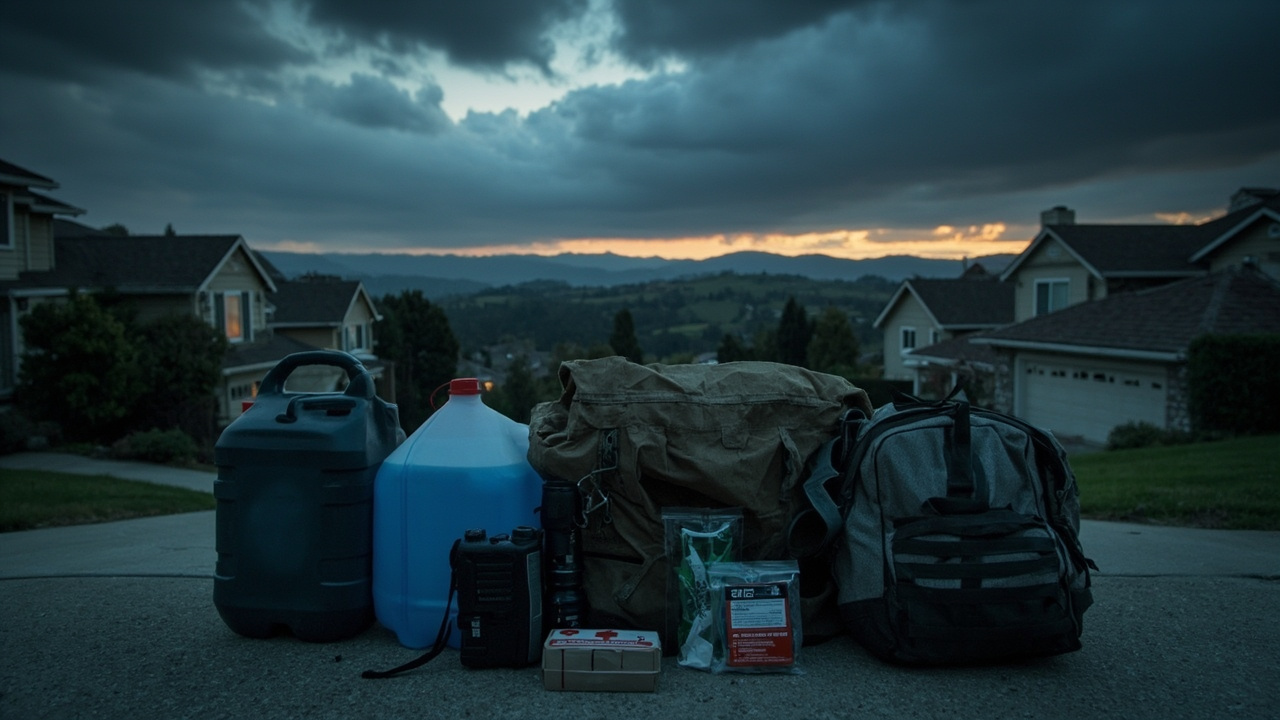
The City of Santa Cruz Update: October 2, 2026 lists four immediate household steps: sign up for CruzAware, know the evacuation zone, clear gutters and drains, and gather basic supplies such as water, food, medications, flashlights and a way to charge phones. It points households to the city's emergency Preparedness Portal for resources.
The October 1, 2026 Fall Safety and Emergency Preparedness - Alta California Regional Center adds fall-specific cautions useful for Scotts Valley: review the emergency plan for changing weather, earthquakes, power outages and shorter days; plan for flooding and outages if household members rely on medical equipment, refrigerated medications or communication devices; practice Drop, Cover, and Hold On for earthquakes; keep medications stored and current; and wear bright or reflective clothing and carry a flashlight when traveling outdoors after dark.
Combine those lists into one shelf, one drawer and one file: shelf-stable food and water, medications, flashlight and phone charging, reflective gear, and a printed zone number and meeting point accessible if phones fail.