TL;DR: Schools should build student safety into climate-hazard plans with assigned monitors, preset triggers, templated alerts, mapped shelter and evacuation routes, and HeatRisk and Air Quality Index thresholds for outdoor activities, according to United Educators.
In October 2026, United Educators author Lindsey Dunn published guidance titled Prepare Students for Climate Hazards that directs schools and campuses to build student safety into plans for climate-related hazards that may affect a campus, according to United Educators.
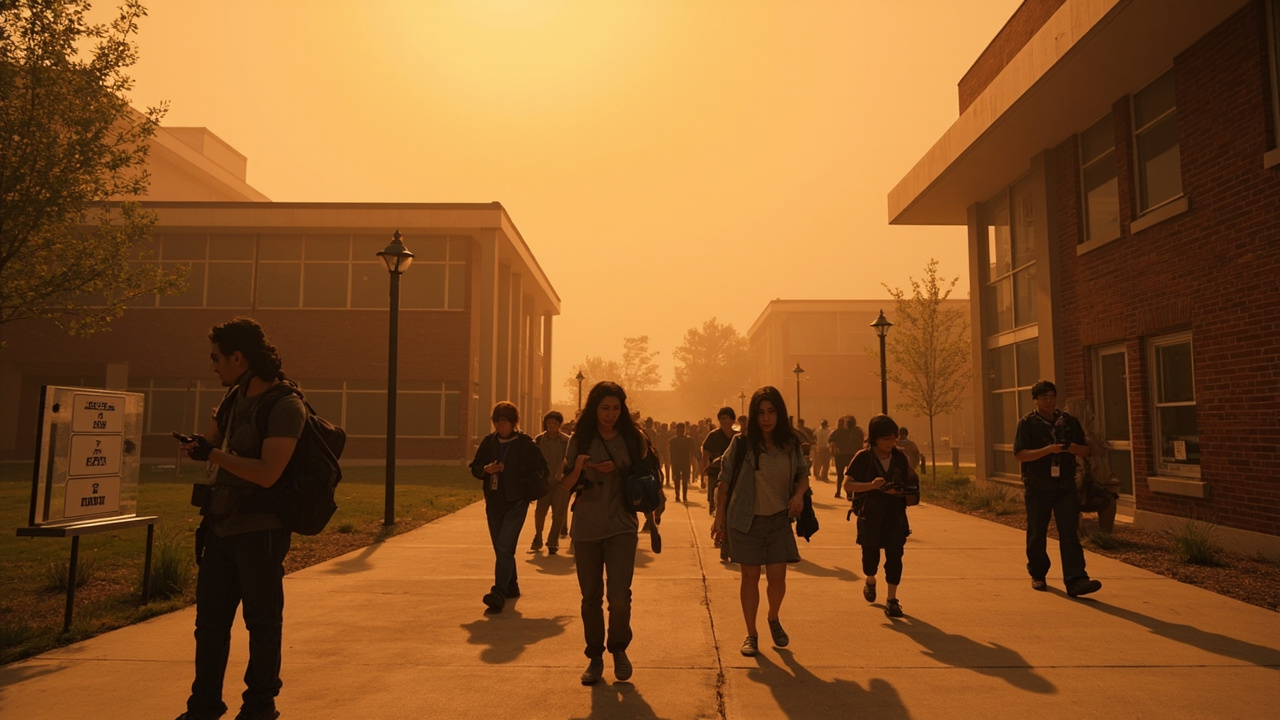
The guidance lists extreme heat, heavy precipitation, flooding, wildfire smoke, and other weather-related hazards as events that can disrupt education and threaten student safety with little warning, according to United Educators.
The guidance cites the Fifth National Climate Assessment for its finding that the frequency, intensity, or duration of weather extremes is increasing across the United States, and related infrastructure and health risks are growing, according to United Educators.
The goal described is to prepare so students are not left without timely instructions, safe shelter, transportation, housing, or other essential support when conditions deteriorate, according to United Educators.
Connect campus teams in one student-centered plan
Creating a student-centered climate risk plan connects emergency management, facilities, student affairs, residence life, athletics, health services, transportation, communications, and academic continuity in one response, according to United Educators.
Residential K-12 schools, including independent boarding schools, also need to address many of the same concerns because students may depend on the school for housing, meals, transportation, supervision, and emergency support around the clock, according to United Educators.
That around-the-clock dependence means a daytime school-closure plan is not enough for a boarding campus, because housing and meals remain institutional responsibilities during the event, according to United Educators.
For family preparedness, the same logic applies at home: identify who watches forecasts, who decides to keep children indoors, where household members will shelter, and how the household will handle meals and transportation if school closes, based on the team roles described by United Educators.
Identify likely hazards and preset triggers
Begin by identifying likely hazards including extreme heat, wildfire and smoke, flooding, hurricanes, tornadoes, severe storms, and winter weather, according to United Educators.
Local emergency management and National Weather Service information can help identify which hazards may affect a school or campus and which ones may arrive quickly or provide preparation time, according to United Educators.
For each hazard, the guidance directs schools to document who monitors conditions and who can activate the response plan, according to United Educators.
For each hazard, schools should also document what forecast, warning, air quality, or facility conditions trigger action, according to United Educators.
The documentation should list which buildings, activities, or student groups face the greatest exposure, according to United Educators.
It should state when to shelter, evacuate, cancel activities, close facilities, or suspend operations, according to United Educators.
It should name who communicates decisions and coordinates with public agencies and other campus constituencies, according to United Educators.
Incorporating predetermined responsibilities and triggers into an emergency plan can reduce delays when the conditions of identified hazards change quickly, according to United Educators.
Preset duties also make it less likely that individual employees will have to make high-stakes safety decisions without clear institutional guidance, according to United Educators.
When drafting or updating a plan, the guidance says to account for consequences such as power outages, blocked roads, loss of heating or cooling, and loss of access to safe drinking water, according to United Educators.
Those secondary conditions could require residence hall evacuations or the cancellation of outdoor classes, athletics, or events, according to United Educators.
Planning for secondary effects helps protect students who may remain safe from the initial weather hazard but lose access to essential services afterward, according to United Educators.
Make emergency messages specific before weather hits
Prepare message templates before severe weather occurs, according to United Educators.
Messages should tell recipients what the hazard is, where it is occurring, who is affected, what action to take, and when to expect another update, according to United Educators.
Clear instructions can prevent students from taking unsafe actions such as attempting to travel through flooded roads or leaving shelter before a severe weather threat has passed, according to United Educators.
Be prepared to use multiple communication channels because power, cellular service, or internet access may fail, according to United Educators.
Make messages accessible to students with disabilities and, where appropriate, available in languages the school community uses, according to United Educators.
Test message delivery systems regularly and maintain current contact information, according to United Educators.
Make everyone aware of how students will receive alerts, according to United Educators.
Colleges and universities subject to the Clery Act also must maintain emergency response and evacuation procedures, according to United Educators.
That requirement includes an immediate campus community notification after confirming a significant emergency or dangerous situation that poses an immediate threat to health or safety on campus, according to United Educators.
Schools subject to that law must test emergency response and evacuation procedures at least annually, according to United Educators.
Map evacuation, shelter, and student accountability
Different climate events require different protective actions, according to United Educators.
A tornado may call for immediate interior shelter, while a wildfire or flood may require early evacuation, according to United Educators.
Wildfire smoke or extreme heat may require moving students to buildings with better filtration or cooling, according to United Educators.
Review a campus to identify evacuation routes, shelter locations, transportation needs, assembly areas, backup power availability, and how to account for students, according to United Educators.
Doing that review before an emergency helps prevent students from becoming stranded, separated from their group, or moved to locations that cannot safely support them, according to United Educators.
If an extended campus evacuation is necessary, the guidance says to consider how to help students in residence halls, students without cars, students who cannot return home, and students who may need temporary housing or transportation, according to United Educators.
K-12 schools should establish parent and caregiver communication and reunification procedures, including alternate sites, according to United Educators.
Residential and boarding schools also should plan for students who cannot safely leave campus or whose families cannot immediately reach them, according to United Educators.
Plans also should include accessible transportation and evacuation assistance for students with mobility, sensory, cognitive, or medical needs, according to United Educators.
That planning will help reduce the risk that a student needing help is overlooked when rapid protective action is necessary, according to United Educators.
Set heat and smoke decision points in advance
In the event of extreme heat or wildfires, the guidance says not to require individual coaches, teachers, or event leaders to improvise when heat or air quality worsens, according to United Educators.
Use tools such as National Weather Service HeatRisk and the Air Quality Index to establish decision points for outdoor classes, athletics, recreation, fieldwork, and events, according to United Educators.
Consistent thresholds help institutions act before students experience preventable exposure rather than waiting until someone becomes ill, according to United Educators.
For household use, HeatRisk is described as a 0 to 4 color scale that shows how risky coming heat is for health, based on National Weather Service and CDC guidance, according to What the AQI numbers and colors mean and Heat Advisory vs Extreme Heat Warning: What to Do reporting.
On that scale, 0 means little to no risk, 1 means minor risk for extremely heat-sensitive people, 2 means moderate risk for most heat-sensitive people, 3 means major risk for anyone without cooling or water, and 4 means extreme risk tied to rare, long heat with little relief at night, according to Heat Advisory vs Extreme Heat Warning: What to Do.
That source explains that HeatRisk considers how unusual heat is for the time of year, how long it lasts, and whether nights stay warm, and that it adds context rather than replacing alerts, according to Heat Advisory vs Extreme Heat Warning: What to Do.
Use the Air Quality Index for smoke-day choices
The U.S. Air Quality Index runs from 0 to 500 in six colors and is run by the U.S. Environmental Protection Agency and published on AirNow together with state, local and tribal air agencies, according to What the AQI numbers and colors mean.
The six categories are 0-50 Good in green, 51-100 Moderate in yellow, 101-150 Unhealthy for Sensitive Groups in orange, 151-200 Unhealthy in red, 201-300 Very Unhealthy in purple, and 301 and higher Hazardous in maroon, according to What the AQI numbers and colors mean.
At or below 100, air is generally considered satisfactory, while above 100 it is unhealthy first for sensitive groups and then, as the number climbs, for everyone, according to What the AQI numbers and colors mean.
Wildfire smoke is mostly PM2.5, so during smoke events the PM2.5 number is the one to watch, according to What the AQI numbers and colors mean.
For particle pollution, sensitive groups include people with heart or lung disease, older adults, and children and teenagers, with a recommendation to include pregnant people during smoke events, according to What the AQI numbers and colors mean.
For ozone, sensitive groups include people with lung disease such as asthma, children and teenagers, older adults, and people who are active outdoors, according to What the AQI numbers and colors mean.
Practice household heat steps used by schools
During hot weather periods in San Diego County, planning ahead and taking precautions helps avoid heat-related illnesses, according to Tips for Staying Safe During Extreme Heat from the San Diego County Office of Education.
That October 1, 2026 school guidance advises staying in an air-conditioned area during the hottest hours, keeping students and staff indoors during afternoon hours, and avoiding outdoor student physical activity in afternoon hours, according to Tips for Staying Safe During Extreme Heat.
It advises wearing light, loose-fitting clothing and notifying students and families to avoid heavy jackets, sweaters, sweatshirts, and other heavy or tight-fitting clothing when operating summer programs for youth, according to Tips for Staying Safe During Extreme Heat.
It advises drinking plenty of water and avoiding sugary drinks, not waiting until thirsty to drink, encouraging staff and youth to bring water, and keeping plenty of water on hand to distribute at a site, according to Tips for Staying Safe During Extreme Heat.
It advises avoiding unnecessary hard work or activities outside during the hottest part of the day, avoiding unnecessary sun exposure, and wearing a wide-brim hat for time in the sun, according to Tips for Staying Safe During Extreme Heat.
The same school resource points families to the County of San Diego Cool Zone program, including the County's 33 branch libraries, community centers and other locations offering air-conditioned spaces for relief from heat, according to Tips for Staying Safe During Extreme Heat.