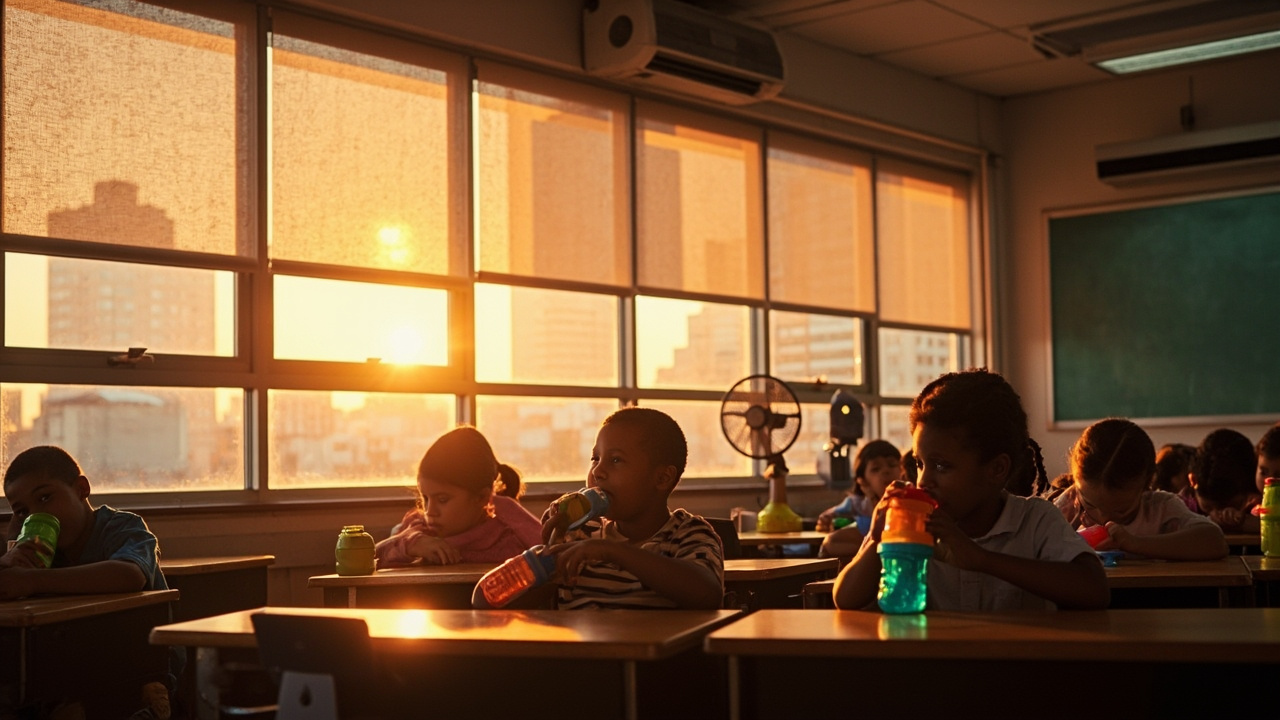
TL;DR: Chicago Public Schools moved all outdoor school activities indoors on Friday, September 4, 2026, under its extreme-heat policy after the National Weather Service issued a heat advisory.
What happened on September 4
This morning, the National Weather Service issued a heat advisory for Chicago, and Chicago Public Schools implemented its policy on extreme heat for Friday, September 4, according to Chicago Public Schools. The district said the action was intended to ensure students and staff are healthy, safe, and comfortable.
All outdoor activities were canceled or held inside if possible, according to Chicago Public Schools. That covered outdoor recess, Physical Education, athletics, and Out-of-School Time activities.
The district notice was signed by Superintendent and Chief Executive Officer Dr. Macquline King. The same notice was published in Spanish for families.
How hot it was and how long it lasted
The National Weather Service issued a heat advisory until 10 p.m. Friday for northern Illinois and northwest Indiana, according to the Chicago Sun-Times. Temperatures were expected to rise to 95 degrees in the afternoon, with humidity making it feel more like 104 degrees.
Friday was the fourth day in a row of dangerous heat in the Chicago area, according to the Chicago Sun-Times. Chicago had been under a heat-related advisory every day since Tuesday, when the temperature at O'Hare Airport peaked at 95 degrees. Wednesday's recorded high was 96 degrees, and Thursday's was 91 degrees.
The heat was forecast to be more extreme farther south of Chicago on Friday, according to the Chicago Sun-Times. The heat index Friday could rise to the 105-110 degree range in Will County and parts of DuPage County.
What changed the day before
On Thursday, September 3, Chicago Public Schools had canceled or moved inside all outdoor activities including recess amid a heat advisory and extreme heat warning, according to NBC Chicago. Heat index levels topped out at 105 degrees, and the National Weather Service described the conditions as dangerous.
NBC Chicago reported that Thursday was the third day in a row with a forecast or observed maximum heat index over 100 degrees. An extreme heat warning was in effect through Thursday night in Cook County, while a heat advisory was in effect in nearly all other parts of the Chicago area except for Lake County.
Later on September 3, the National Weather Service canceled the Extreme Heat Warning for Northern and Central Cook County, including the City of Chicago, according to a Chicago Public Schools update. As a result, CPS lifted extreme-heat protocols for the remainder of that day and said activities, including athletic practices and games, could move forward outdoors where schools had flexibility. Schools that could not reverse earlier cancellations were told that was acceptable.
Classrooms, water, and building steps
As a reminder, all CPS classrooms are equipped with air conditioning, and the CPS facilities team worked with schools to fix air-conditioning systems that encountered issues that week, according to Chicago Public Schools.
The district recommended students stay hydrated and bring full water bottles to school, according to Chicago Public Schools. Opportunities to refill water were provided throughout the day.
School leaders used a heat action plan to keep students healthy, safe, and comfortable, according to Chicago Public Schools. The hydration steps were to ensure staff and students remained sufficiently hydrated, ensure water fountains were in working order, encourage and allow full water bottles with refill opportunities, and monitor students taking particular medications to ensure proper hydration.
To keep rooms cool, the plan called for drawing shades to keep sunlight out, keeping air circulating by opening windows and doors and by using fans, turning off overhead lights, computers, and appliances when not required for instruction, and moving classes from rooms exposed to sunlight to auditoriums, interior, or lower-level rooms, according to Chicago Public Schools.
Athletics and tickets for September 4
Due to the forecasted extreme heat for September 4, all outdoor athletics games were postponed and all practices were either canceled or moved indoors, according to Chicago Public Schools. Regular programming could resume on September 5, pending updates.
For tickets bought through HomeTown ticketing for September 4 events, district policy provided no refund, but the ticket could be used when the game or event was rescheduled, according to Chicago Public Schools.
How to pace outdoor exposure
The Chicago Office of Emergency Management and Communications advised residents to drink plenty of water and limit time spent outdoors during extreme heat, as shared by Chicago Public Schools. NBC Chicago also reported that residents who had to spend time outdoors during the afternoon heat should drink plenty of water and wear loose-fitting, light-colored clothing.
Chicago Public Schools shared additional Office of Emergency Management and Communications guidance to keep electric lights off or turned down, minimize use of ovens and stoves, wear loose, light, cotton clothing, never leave people or pets in a closed car even for a few minutes, and check on family, friends, and neighbors.
The district pointed families to additional guidelines on the CDC website for older adults age 65 and older, infants and children, those with chronic conditions, those who are pregnant, and others. It also pointed families to a map of cooling centers across the city, a printable list of cooling centers by neighborhood, and resources from the Office of Emergency Management and Communications.
Heat exhaustion: signs and response
Families were told to watch for symptoms of heat-related illnesses including heat exhaustion and heat stroke, according to Chicago Public Schools.
Heat exhaustion symptoms listed were heavy sweating; cold, pale, and clammy skin; fast, weak pulse; nausea or vomiting; muscle cramps; tiredness or weakness; dizziness; headache; and fainting, according to Chicago Public Schools.
For heat exhaustion, the listed response was to move to a cool place, loosen clothes, put cool, wet cloths on the body, and sip water, according to Chicago Public Schools. The district said to get medical help right away if the person is throwing up, symptoms get worse, or symptoms last longer than one hour.
Heat stroke: signs and response
Heat stroke symptoms listed were high body temperature of 103 degrees Fahrenheit or higher; hot, red, dry, or damp skin; fast, strong pulse; headache; dizziness; nausea; confusion; and losing consciousness, according to Chicago Public Schools.
For heat stroke, the district said to call 911 right away because heat stroke is a medical emergency, according to Chicago Public Schools. Other listed steps were to move the person to a cooler place, help lower body temperature with cool cloths or a cool bath, and not give the person anything to drink.
Storms and the weekend outlook
A chance of evening thunderstorms was expected to be followed by an overnight low of 74 degrees, according to the Chicago Sun-Times. NBC Chicago reported that high heat and humidity were expected to continue Friday, although a cold front possibly with thunderstorms moving inland from Lake Michigan Thursday night could lead to rapidly improving conditions.
If thunderstorms formed, some could turn strong or severe, with gusty, damaging winds, locally heavy downpours, and lightning as the primary threat, according to NBC Chicago. The Storm Prediction Center placed much of the Chicago area under a slight risk of severe weather, ranked as level two of five.
For preparedness, the week showed why families benefit from keeping full reusable bottles ready, confirming school refill points, reviewing cooling-center locations before a warning, and tracking National Weather Service advisories, Chicago Public Schools notices, and local forecasts through Friday night.