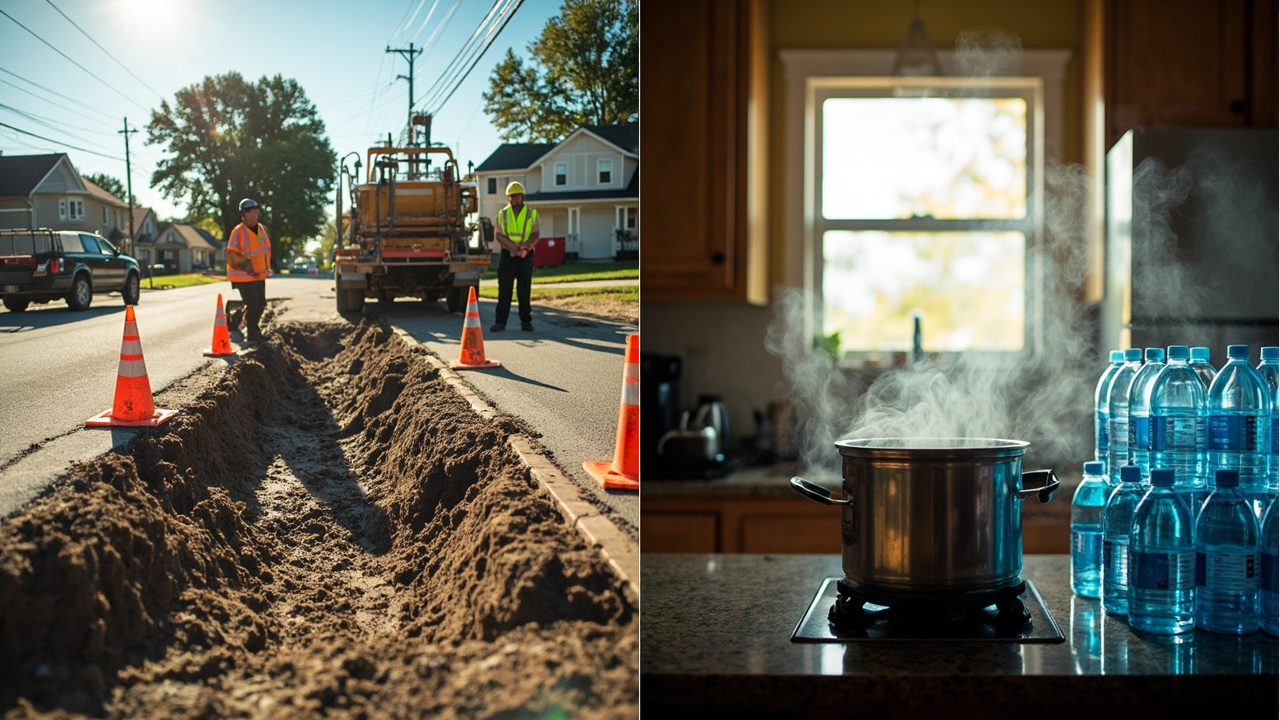
TL;DR: Citizens Energy Group lifted on Oct. 13 a precautionary 72-hour boil-water advisory for northwest Indianapolis and southeastern Boone County after tests confirmed safe drinking standards following an Oct. 11 main break near 86th Street and Lafayette Road.
Citizens Energy Group issued the precautionary advisory on the morning of Sunday, Oct. 11, after a water main break just east of 86th Street and Lafayette Road lowered pressure below 20 pounds per square inch for some customers. The utility announced the notice at 10:50 a.m. and set the duration at 72 hours or until lifted, according to the report titled Northwest Indianapolis and Boone County Residents Told to Boil Water for 72 Hours After Main Break Drops Pressure.
The newest verified development came two days later. Citizens lifted the advisory, with an update timed at 10:55 a.m. EDT on Oct. 13, after water-quality testing required by the Indiana Department of Environmental Management confirmed compliance. According to the report titled Precautionary boil water advisory lifted for parts of northwest Indy, Boone County | wthr.com, Citizens said laboratory results successfully confirmed that drinking water in the advisory area was fully compliant with all safe drinking standards and water no longer needed to be boiled before consumption.
The affected area was described as near 86th Street and Lafayette Road on the northwest side of Indianapolis, along with portions of southeastern Boone County. Citizens said pressure had been restored while repairs continued. The same lifting report identified the impacted zone in those general terms, while more detailed boundary maps were published in the initial notices.
Where the advisory applied
Marion County northwest side
For Marion County, Citizens listed a main advisory block with four sides. The northern edge was Interstate 865. The southern edge was 86th Street. The eastern edge was Cooper Road in Marion County, which continues as County Road 850 East in Boone County. The western edge was Interstate 65.
That rectangle covered neighborhoods and a school on the south side of the zone. Citizens included the Walden Trace neighborhood and Fishback Creek Public Academy inside the southern boundary, according to the report titled Parts of Boone, Marion counties under boil water advisory.
Southeastern Boone County and Eagles Nest
A second defined area in Boone County was listed separately. Its eastern edge was Indianapolis Road. Its western edge was County Road 600 East. Its northern edge was County Road 750 South. Its southern edge was County Road 800 South.
That pocket included the Eagles Nest neighborhood. The Current Publishing account presented that Boone County box with a map credited to Citizens Energy Group and named Eagles Nest as inside it.
Conflicting early lines and how to confirm
Early coverage did not line up exactly with the utility map. The MedicalDaily report noted that the first WRTV account listed 96th Street as the northern edge and Lafayette Road as the western edge in Marion County, differences from the Interstate 865 and Interstate 65 lines in the utility notice.
Residents near any edge road were told to use the current utility notice rather than an earlier news map. Citizens directed customers to the alerts section of its website and to the Citizens Contact Center at (317) 924-3311 to confirm whether a specific address was included. The utility did not state how many customers were covered, and it reported no illness linked to the water.
Why low pressure triggered a boil notice
The advisory was precautionary rather than a finding of contamination. Citizens said the water it produces had remained safe during the event, as noted in the MedicalDaily account referencing WRTV. The concern involved the distribution pipes that carry treated water to homes and businesses.
Under normal operation, mains remain under steady pressure that pushes water outward and limits entry of outside material. When pressure drops below 20 psi, outside water and contaminants can move inward through cracks, breaks and joints. That threshold is used in federal guidance on pressure loss and by Indiana regulators, the MedicalDaily report explained.
Soil, groundwater or other contaminants can enter in that low-pressure window. Because such entry cannot be seen, utilities collect samples after pressure returns and require boiling until laboratory results confirm safety.
Citizens told people who drank tap water before the 10:50 a.m. Oct. 11 announcement that there was no indication the water was unsafe, but said they should boil water from that point until the advisory ended. That before-and-after distinction mattered for families deciding whether to discard ice made Sunday morning or simply switch to boiled or bottled water going forward.
What residents were told to boil and what could continue
Drinking, ice, teeth, dishes and food
Until the advisory ended, affected customers were instructed to use boiled or bottled water for drinking, making ice, brushing teeth, washing dishes and preparing food. Bottled water was listed as an acceptable alternative to boiled tap water.
The same instruction applied to businesses that serve food or drink. Child care centers and other workplaces inside the boundaries were expected to follow the same precautions for drinking water, ice and food preparation.
Showering, cleaning and flushing
Tap water remained usable without boiling for showering, cleaning and flushing toilets. Those uses do not involve swallowing water, so they were separated from the drinking-water precautions in both the MedicalDaily and Current Publishing accounts.
The distinction helped households conserve stored water. Families could keep flushing and basic cleaning on tap supply while reserving boiled and bottled supply for the mouth and for the kitchen.
Exact boiling instruction for this event
Citizens instructed customers to bring water to a rolling boil, keep it boiling for three minutes, and allow it to cool before use. The Current Publishing report carried the same three-minute instruction for drinking, ice, teeth, dishes and food preparation.
That period is longer than the one-minute boil described by the CDC at most elevations. The MedicalDaily report flagged that difference and advised residents to follow the utility's three-minute direction for this advisory. Boiled water was to be cooled before drinking or before use in infant formula and ice.
Anyone who developed diarrhea, vomiting, stomach cramps or nausea, especially an infant, an older adult or a person with a chronic condition, was advised to contact a clinician and mention the boil advisory.
Schools, formula and higher-risk households
Fishback Creek Public Academy sits inside the Marion County advisory area. Parents were told to watch for school notices about drinking fountains and meal service and to send children with bottled water until the notice ended.
The advisory reached into homes, schools and child care routines across a busy section of the metro area, including Walden Trace, Fishback Creek Public Academy and the Eagles Nest area. Businesses and caregivers in those pockets faced the same kitchen question at the same time.
Households mixing infant formula were told to use boiled and cooled water or bottled water for formula and ice. Families caring for older relatives or for people with weakened immune systems were told to take extra care until Citizens confirmed safety.
The MedicalDaily report said infants, older adults and people with severely weakened immune systems may face higher risk from contaminated water. Citizens advised those households to seek guidance from a health care provider about drinking water and listed the EPA Safe Drinking Water Hotline at (800) 426-4791 for questions.
How the 72-hour clock and testing worked
The notice was set to run 72 hours or until lifted, which pointed to about late Wednesday morning, Oct. 14, unless testing allowed an earlier end. Customers were told to check the alerts section of the Citizens website to learn when it ended.
Release from a boil notice depends on sampling after pressure recovery. In this case, the Indiana Department of Environmental Management required water-quality tests, and Citizens reported that those tests confirmed full compliance with safe drinking standards.
A prior local example showed the same sequence. After a main break near 56th Street and Reed Road in June, the utility lifted its advisory two days later once required testing showed safe water, according to a Citizens notice described in the MedicalDaily report. In that earlier notice, the utility said, “We know water outages and boil advisories are inconvenient.”
What this means for household water readiness
A three-day boil notice changes daily routines without stopping tap flow for cleaning and flushing. Homes that kept bottled water available had an immediate alternative for drinking, ice, teeth and formula while keeping a pot available for the three-minute boil.
Address checking was part of the task. With Interstate 865, 86th Street, Cooper Road and County Road 850 East, Interstate 65, Indianapolis Road, County Road 600 East, County Road 750 South and County Road 800 South all forming edges, plus named places including Walden Trace, Fishback Creek Public Academy and Eagles Nest, a street-by-street check mattered. The utility's (317) 924-3311 line and website alerts section were the confirmation points named in the notices.
The Oct. 13 lift closed the event for the listed zones. Water in the advisory area no longer needed to be boiled before consumption once Citizens announced that the required tests were complete.